 Mushroom Health Hub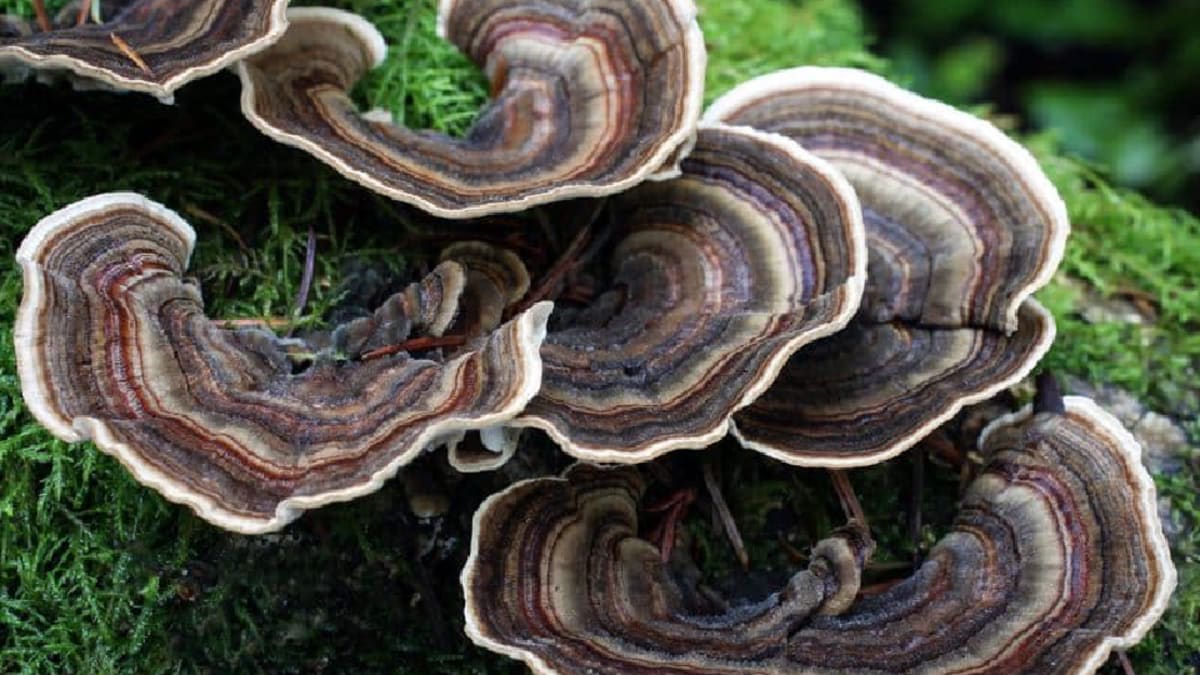
Turkey tail (Trametes versicolor) is a rot-loving polypore fungus common on dead hardwood logs. Real ones display a velvety cap with a bright white underside covered in tiny pores. Check those pores. Proper field identification means verifying pore density alongside cap flexibility so we do not accidentally haul home a basket of ineffective lookalikes which completely lack the deeply studied polysaccharopeptides linked to immune support. Over multiple foraging seasons we have worked through every major identification marker and built a checklist that holds up across all temperate regions.
Key Takeaways
- 1Look for 3-8 pores per millimeter on a white underside - fewer pores indicate a different genus, and a microscopic black line separates the velvety cap layer from the white internal flesh
- 2False turkey tail has a bare smooth underside with zero pores - this single check eliminates the most common lookalike instantly without requiring a loupe
- 3A 2025 analysis found universal ITS DNA barcoding failed to distinguish closely related Trametes species in 15% of commercial samples - manufacturers now use targeted PCR markers
- 4Take a spore print when visual markers are ambiguous - genuine Trametes versicolor leaves a white deposit of curved cylindrical spores roughly 5 micrometers long
The Anatomy of Trametes Versicolor
Physical traits dictate our field identification. We inspect the fruiting body from top to bottom. The top layer shows concentric bands alternating between brown, grey, reddish-brown, and tan hues. Thousands of fine hairs cover this surface. It feels soft. When we snap the cap in half a microscopic black line separates the textured upper layer from the white internal flesh. That thin black line helps us avoid gathering the wrong fungi.
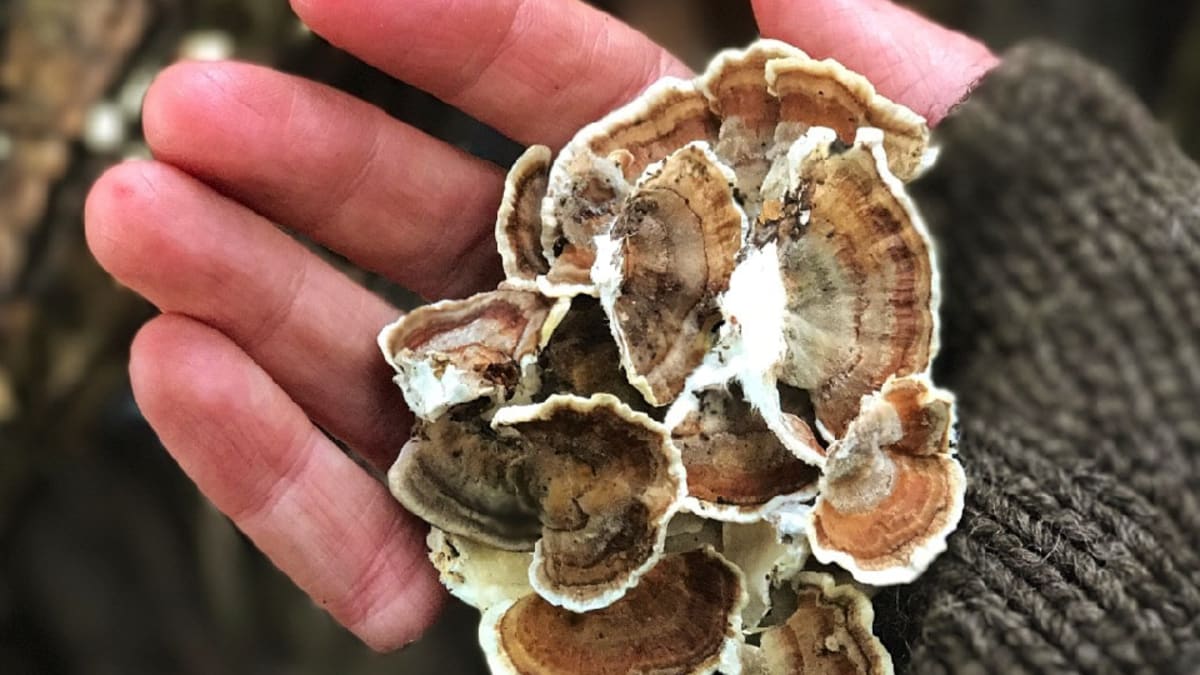
The lower layer produces reproductive spores through a white or cream-colored pore surface. We never find gills or teeth here. A mature bracket rarely exceeds three millimeters in thickness. Look at the margin because the growing edge always displays a lighter white or cream band compared to the darker brown concentric rings located closer to the base attachment point on the wood.
Habitat and Ecological Role
Trametes versicolor is a primary saprophyte. It eats dead wood. The mycelium attacks fallen hardwood logs to kickstart white rot decomposition. We track these fungi on decaying oak and maple logs across temperate climates where they thrive in deep shade. Our best foraging happens near humid forest streams where fallen timber maintains enough internal moisture to support the energy-intensive production of hundreds of reproductive brackets along the rapidly decaying bark.
Seasonal changes affect appearance. The fungus begins forming fresh caps in late spring before growth accelerates during wet summer months. Droughts stop development entirely. We harvest our highest quality specimens in late autumn when the caps hold maximum moisture. Winter freezes halt new cellular division. The frozen brackets stay attached to the wood through January and February, turning a pale grey as harsh winter winds strip away their phenolic pigmentation.
The Field Identification Checklist
We evaluate wild specimens using four distinct physical markers. A verified harvest must pass every single check. Look at the underside first. A bare lower surface indicates a completely different taxonomic group. We use a jeweler's loupe to count the holes. We need to see between three and eight openings per millimeter. Fungi with only one to three pores per millimeter belong in a different family.
Next we test structural flexibility. Fresh caps feel thin and pliable. They bend backward easily. Older specimens dry out and get brittle. When the fungus retains moisture the fruiting body maintains a leathery pliability that lets it bend back on itself without cracking. To finish the assessment we run a thumb over the top to confirm the surface feels like velvet. Rough or coarse texture points to a lookalike.
DNA Barcoding Versus Visual Identification
Visual guides fail hard in commercial laboratories. Extract manufacturers require absolute genetic certainty. A 2025 analysis in the journal BIO Web of Conferences examined 50 commercial mushroom samples. The researchers found that universal ITS barcoding failed to distinguish between closely related species in 15 percent of cases. That failure rate forced testing facilities to adapt.
Scientists built a new protocol using targeted polymerase chain reaction markers to provide exact genetic matches for Trametes versicolor in lab settings, ensuring buyers receive the actual medicinal compounds advertised on the product label without cross-species contamination creeping into the batch. Field morphology remains reliable for home foragers looking to brew tea. Take a spore print to confirm the find. A white deposit seals the deal.
The Common Lookalikes
We must separate Trametes versicolor from four common imposters in the woods.
False turkey tail (Stereum ostrea) operates as a crust fungus with a totally smooth underside. It lacks pores entirely. It grows slightly larger than true turkey tail and feels much tougher. We often spot both species inhabiting the exact same decaying oak log just inches apart. Green algae routinely colonizes the mature caps. This causes novice hunters to panic about potential toxicity. The organism itself poses no chemical danger.
Violet toothed polypore (Trichaptum biforme) grows heavily on dead hardwood. Flip it over. We see purple jagged teeth instead of round pores. The top lacks those concentric color bands found on verified specimens. This fungus decays wood at a much faster rate. We consistently spot these purple-tinged brackets swarming the bark of dead paper birch trees deep into late autumn.
Multicolor gilled polypore (Trametes betulina) shares the same genus. It produces real gills on its lower surface. The thick caps form large kidney shapes. Mycologists previously classified this gilled species under a completely different taxonomic group before modern genetic sequencing revealed its true evolutionary lineage within the Trametes family. We find them attached to dead ash and beech timber.
Hairy bracket (Trametes hirsuta) presents a white or grey cap covered in coarse hairs. It feels rough. True turkey tail feels like fine velvet. The pores on a hairy bracket are larger and number only one to three per millimeter. This larger size makes them easy to spot without specialized magnification. This hairy variant prefers dead fruit trees and fallen willow branches.
Taking a Spore Print for Verification
Field morphology provides strong evidence but a spore print delivers ultimate confirmation. We use this technique when visual markers appear ambiguous due to environmental damage or extreme age. We pluck a fresh cap straight from the log. We place it pore-side down on a sheet of dark paper or aluminum foil. Cover the mushroom with a glass bowl to block any drafty air currents. We wait twelve to twenty-four hours.
The fungus will drop thousands of spores onto the surface below. Genuine Trametes versicolor leaves a stark white deposit. The spores measure roughly five micrometers in length. Under a microscope they look like tiny curved cylinders. If the deposit appears brown or yellow the mushroom belongs to a different family. Spore printing eliminates all guesswork from wild mycology so we can base our preparations on hard taxonomic data rather than subjective visual interpretations of cap color.
Chemistry and Extraction Methodology
Finding the correct mushroom solves only half the puzzle. We must extract the active compounds. Raw fungal tissue consists almost entirely of chitin. Humans lack the digestive enzyme chitinase. Eating raw caps provides zero immune support. The tough cellular walls trap the medicinal polysaccharopeptides PSK and PSP inside a structural matrix. High heat breaks down these barriers.
Boiling the dried caps in water pulls out the water-soluble beta-glucans. We simmer foraged harvests for two to three hours. The resulting dark decoction holds the immune-modulating compounds. Alcohol tinctures serve a different purpose. Ethanol extracts the poorly soluble triterpenes and sterols. The beta-glucans stay trapped in the fibrous waste material until we run a secondary hot water decoction. Dual extraction combines both methods to capture the full spectrum. For a complete preparation protocol see our guide on how to cook turkey tail mushrooms.
Safety Profile and Dosage Protocols
North America and Europe host no toxic Trametes lookalikes. Consuming a misidentified false turkey tail will not harm human foragers. It tastes like boiled wood. The real danger is wasting weeks taking ineffective fungi. Stereum ostrea lacks the medicinal molecules we want. Trichaptum biforme possesses a wildly different nutritional profile.
Clinicians and mycologists actively debate the ideal daily intake. Mycologist Paul Stamets recommends one to three grams of dried powder daily for general maintenance. Serious health applications require four to nine grams per day. We monitor tolerance carefully. High doses occasionally cause mild gastrointestinal distress or darkening of the fingernails, though the 2004 International Journal of Medicinal Mushrooms review documented a high safety profile for isolated extracts and whole fruiting body powders administered over long durations. A 2022 study in Mycology confirmed that verified fruiting body harvests maintain consistent polysaccharopeptide concentrations across diverse geographic populations of the species, validating wild foraging as a viable source when identification is done correctly.
Frequently Asked Questions
Gordon is a former high-tech researcher who traded his silicon chips for spores. With a background in molecular visualization, he spends his time mapping the intricate structures of medicinal fungi.
References & Further Reading
- Mycology 2022 — Mycology (2022)
- BIO Web of Conferences 2025 — BIO Web of Conferences (2025)
- International Journal of Medicinal Mushrooms 2004 — International Journal of Medicinal Mushrooms (2004)