 Mushroom Health Hub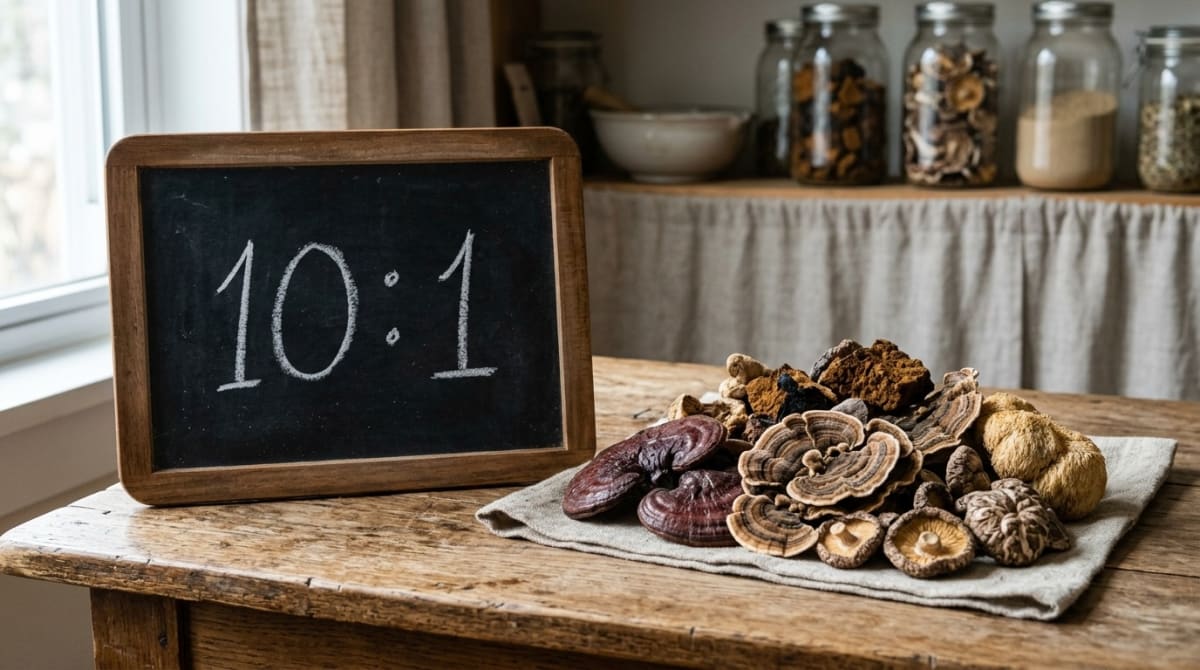
Most buyers see a 10 to 1 mushroom extract label and assume they are getting ten times the clinical strength. The math lies. We checked the data. We reviewed certificates of analysis from dozens of commercial suppliers to track actual compound survival. A high extraction number simply indicates the manufacturer simmered ten pounds of raw mushrooms down into one pound of powder, and that intense thermal processing often destroys the exact immune-supporting beta-glucans people are paying a premium to get.
Key Takeaways
- 1A 10 to 1 extract ratio describes how much starting material was boiled away, not how potent the finished powder is
- 2High extraction ratios often signal poor-quality starting material or harsh processing that degrades beta-glucans
- 3The guaranteed beta-glucan percentage is the only number that proves active compounds actually survived extraction
- 4Different mushrooms need different ratios: 1 to 1 for fleshy lion's mane, 8 to 1 dual extract for woody reishi or chaga
The Hidden Math Behind Mushroom Ratios
The mushroom extract ratio meaning is entirely about raw weight. An 8 to 1 label just means the facility used eight kilograms of dried fungus to yield one kilogram of finished product. People assume this creates a huge payload of active ingredients. It rarely works out that way.
Fungi build their cell walls out of chitin. That is the exact same tough material forming crab shells. Human stomachs cannot break chitin apart. Manufacturers use hot water or alcohol to melt those walls down and release the beneficial beta-glucans trapped inside before straining out the solid waste. The remaining liquid then gets dried into a fine dust.
A high ratio usually points to a starting crop that contained very little water-soluble material to begin with. The facility ended up throwing away ninety percent of the starting weight. We see this happen when brands rely on cheap growing mediums or low-quality fruiting bodies, forcing them to boil the material for hours on end just to extract every last drop of soluble matter from a spent organic base.
Prolonged simmering wrecks delicate molecular structures. A 2019 review in Critical Reviews in Food Science and Nutrition showed that high-heat extraction methods physically snap long-chain polysaccharides apart. The end result is a highly concentrated powder totally lacking in biological value. The immune trainers become useless fragments. White blood cells do not recognize them. The body needs intact beta-glucans to mount a defense, so it cannot do much with a pulverized soup of degraded starch.
How Ratios Change By Mushroom Type
Different species require totally different processing methods. The ideal number depends entirely on the fungus in question.
Lion's mane functions beautifully at a simple 1 to 1 extraction. The supplier steeps the raw material in hot water and dries the entire mixture together. This gentle steeping process protects the fragile nerve-supporting compounds while keeping the beta-glucans completely intact, meaning the resulting powder retains the broad chemical and biological spectrum of the whole original mushroom.
Reishi demands a dual extraction. Water pulls out the immune-supporting compounds. Alcohol draws out the earthy-bitter triterpenes that promote relaxation. A standard reishi process usually lands around an 8 to 1 ratio simply because the woody fruiting body contains dense amounts of indigestible fiber.
Chaga forms a dense, hard mass on birch trees. This means it requires aggressive processing just to yield anything useful. Steep ratios look completely normal for this specific woody conk. Buyers must still verify the end product. Manufacturers often sneak carrier powders like maltodextrin into the vats during the drying phase to prevent clumping, and that inexpensive filler artificially alters the reported ratio while heavily diluting the therapeutic dose.
Why Percentages Matter More Than Ratios
Ignore the marketing numbers on the front of the bottle. Check the supplement facts panel on the back. You need a guaranteed beta-glucan percentage.
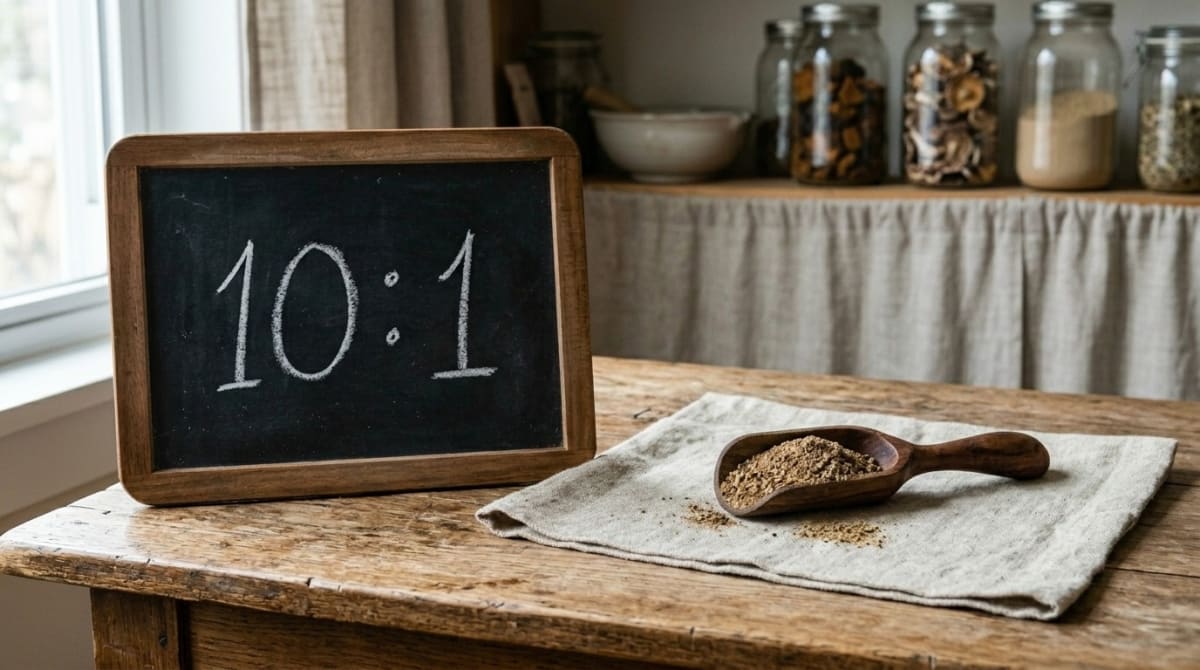
Beta-glucans make medicinal mushrooms work. They bind to specialized locks on immune cells and trigger defensive responses. A high ratio reveals absolutely nothing about how many of these active compounds actually survived the boiling vat. A poorly processed 10 to 1 extract might contain only five percent beta-glucans, while a carefully crafted 1 to 1 powder often delivers twenty-five percent or more.
We routinely see companies blast their raw materials to achieve an extreme 20 to 1 claim on the label, and those products almost always show the lowest measured polysaccharide levels in our lab data. The extreme heat denatures the proteins. The powder might look dark and taste strong. The actual medicinal value is gone.
Look for products listing greater than twenty percent verified beta-glucans. If a brand hides behind a giant marketing number without providing third-party laboratory tests confirming the final active content they are likely selling broken plant starch instead of functional medicine. A verified beta-glucan test proves the active compounds actually survived the heat. Our breakdown of mycelium versus fruiting body supplements covers why the starting material matters just as much as the extraction method.
Frequently Asked Questions
Gordon is a former high-tech researcher who traded his silicon chips for spores. With a background in molecular visualization, he spends his time mapping the intricate structures of medicinal fungi.