 Mushroom Health Hub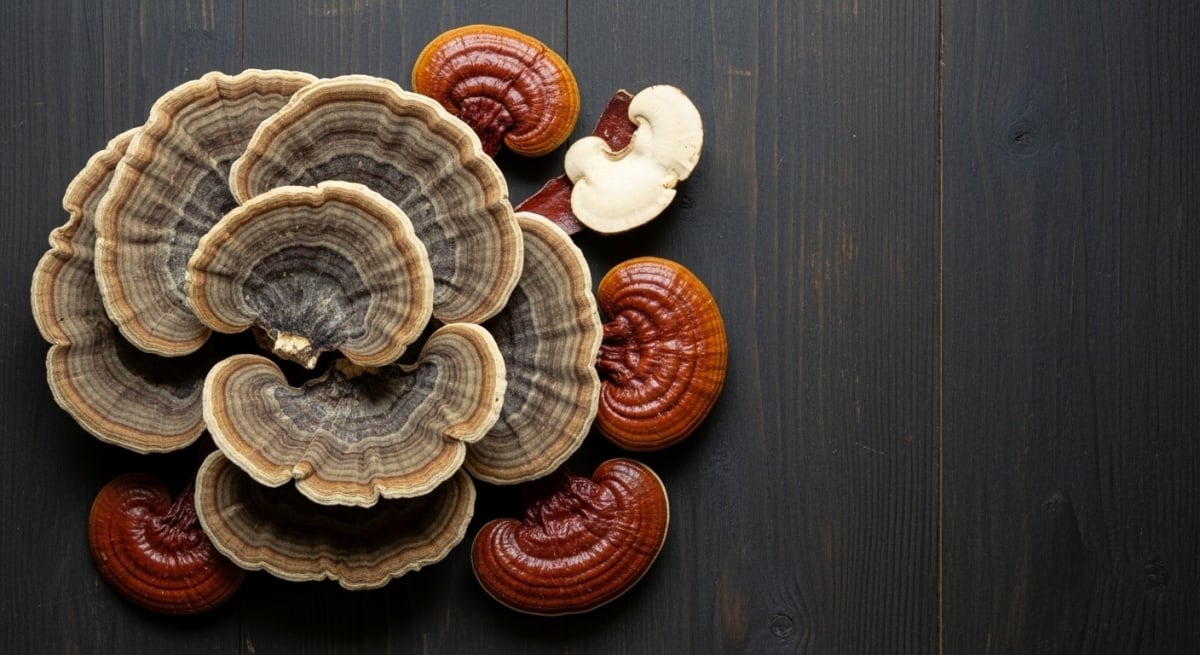
Beta-glucans form the rigid architecture of fungal cell walls. They are immune trainers. We consider these branching carbohydrates the true engine driving the health effects of turkey tail and reishi mushrooms. They prepare our biology. When we swallow a proper mushroom extract these massive molecular structures survive stomach acid to engage directly with receptor sites on our intestinal immune cells, setting off a sweeping cascade of defensive biological responses that fortify baseline immunity against common external stressors.
Key Takeaways
- 1Beta-glucans are branching carbohydrates in fungal cell walls that bind to immune cell receptors and trigger an innate defensive cascade
- 2A 2023 randomized trial showed 200mg of reishi beta-glucans daily for 84 days raised CD4+, CD8+, and natural killer cell counts with zero organ function changes
- 3Hot water extraction is the only method that breaks through chitin cell walls - raw mushrooms and alcohol-only extracts deliver no usable beta-glucans
- 4Look for a verified beta-glucan percentage (20-30%) on the label - high polysaccharide numbers without this figure often hide cheap grain starch filler
The Mechanism of Immune Training
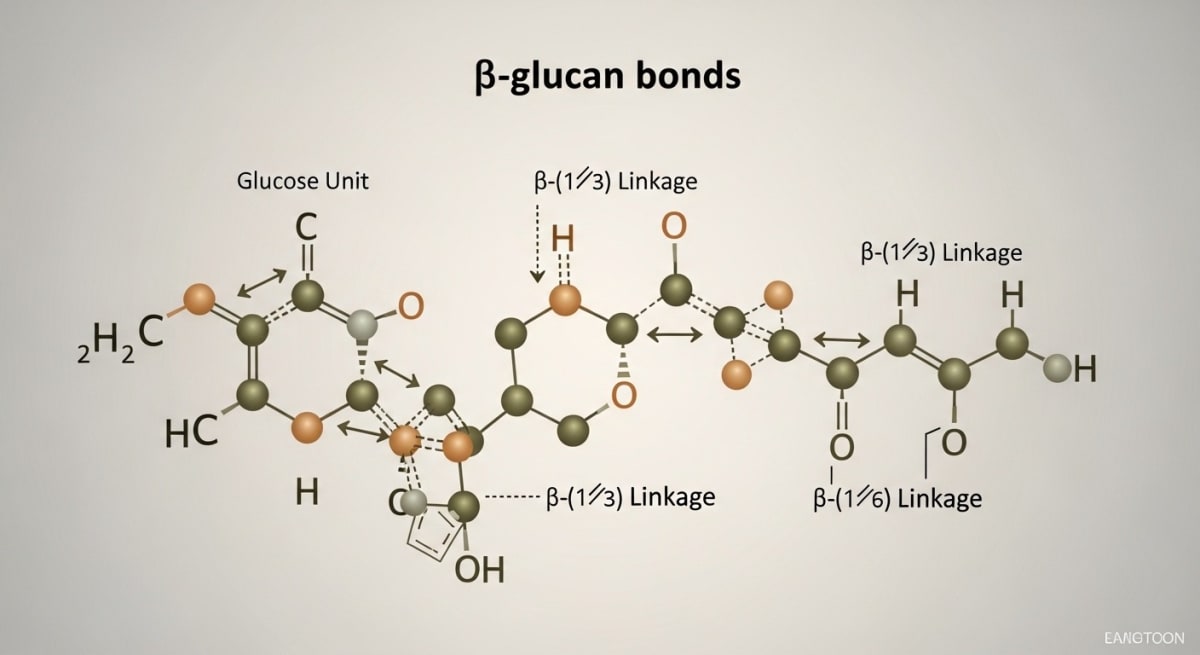
Our deep dive into the clinical literature reveals the biological pathways. The trigger gets pulled in the gut. Intestinal macrophages carry specialized lock-and-key receptors. These structures fit the exact beta-1,3 and beta-1,6 branching found uniquely in fungal carbohydrates. The macrophage swallows the molecule whole. It drags that intact polysaccharide straight to the bone marrow. Inside the marrow space the macrophage chemically chops the enormous complex carbohydrate into dozens of tiny manageable fragments. It then hands those smaller pieces off to circulating granulocytes and natural killer cells, an elegant biological handoff that fully arms our innate defense grid for maximum activity before any real pathogen ever shows up.
We always demand human data to back this up. A 2023 randomized double-blind placebo-controlled trial tracked this exact pathway in healthy adults. Researchers gave participants 200 milligrams of reishi beta-glucan every single day for 84 days. CD4+ and CD8+ T-lymphocyte counts spiked in the intervention group compared to the placebo baseline. Natural killer cell numbers climbed as well. The research team noted that this dietary intake safely modulates both innate and adaptive immune responses over a twelve-week stretch without moving a single liver or kidney function marker out of range.
Fungal Polysaccharides vs. Grain Polysaccharides
Source material ultimately dictates the molecular shape. Shape determines biological function. We see a lot of confusion regarding cereal grains like oats and barley. Those plants grow beta-glucans with beta-1,3 and beta-1,4 linkages. This linear geometry readily dissolves in stomach fluids to form a thick viscous paste that mechanically snags passing cholesterol and slows down systemic glucose absorption, an undeniable benefit for basic cardiovascular function that unfortunately does absolutely nothing for human immunity. Oat beta-glucans cannot bind to the Dectin-1 receptors on our white blood cells.
Fungal versions from mushrooms and yeast carry a beta-1,3 backbone littered with protruding beta-1,6 branches. That jagged branching architecture trips the immune-training alarm. You just cannot swap oat bran for mushroom extract and expect any immune modulation. We run strict analytical tests to separate these compounds from alpha-glucans. Alpha-glucans are basic starches and simple sugars like glycogen. The Megazyme enzymatic assay currently stands as our primary method for accurately quantifying legitimate fungal beta-glucan content. Sky-high total polysaccharide numbers mean precisely zero if a manufacturer secretly pads their capsules with cheap brown rice starches scraped off the growing medium.
Why Extraction Methods Matter
Affiliate Disclosure: Mushroom Health Hub earns commissions from qualifying purchases made through links on this page. This supports our lab testing and does not affect our recommendations. We only recommend supplements that pass our quality standards. Learn more
Tossing raw mushrooms into a salad delivers no active beta-glucans to your bloodstream because humans simply lack the digestive enzyme chitinase required to chemically break down the remarkably tough cell walls that fungi use for structural support in the wild. Fungal cell walls are built out of rigid chitin. That happens to be the very same dense polymer locking together crab shells and insect exoskeletons. The beneficial carbohydrates remain trapped. Our extraction protocol relies exclusively on high-temperature water processing to solve this problem. Boiling water literally melts the tough chitin armor. The intense thermal treatment dissolves the structural walls and lets the water-soluble beta-glucans float free for actual human absorption. Alcohol extraction only pulls out the bitter triterpenes. Hot water remains non-negotiable.
We track the clinical data closely on dosing parameters. The trials repeatedly point toward a daily intake window of 200 to 500 milligrams of purified mushroom beta-glucans for measurable baseline support. We use Real Mushrooms Turkey Tail Extract as our benchmark because the label states a guaranteed beta-glucan percentage rather than a vague total polysaccharide figure. Premium commercial extractions consistently yield a verified concentration sitting right between twenty and thirty percent by volume. Any product missing this number on the back panel gets rejected from our protocol immediately.
Frequently Asked Questions
Gordon is a former high-tech researcher who traded his silicon chips for spores. With a background in molecular visualization, he spends his time mapping the intricate structures of medicinal fungi.
References & Further Reading
- Nutrients 2023 — Nutrients (2023)