 Mushroom Health Hub
Ganoderma curtisii identification, bioactive compounds, and extraction
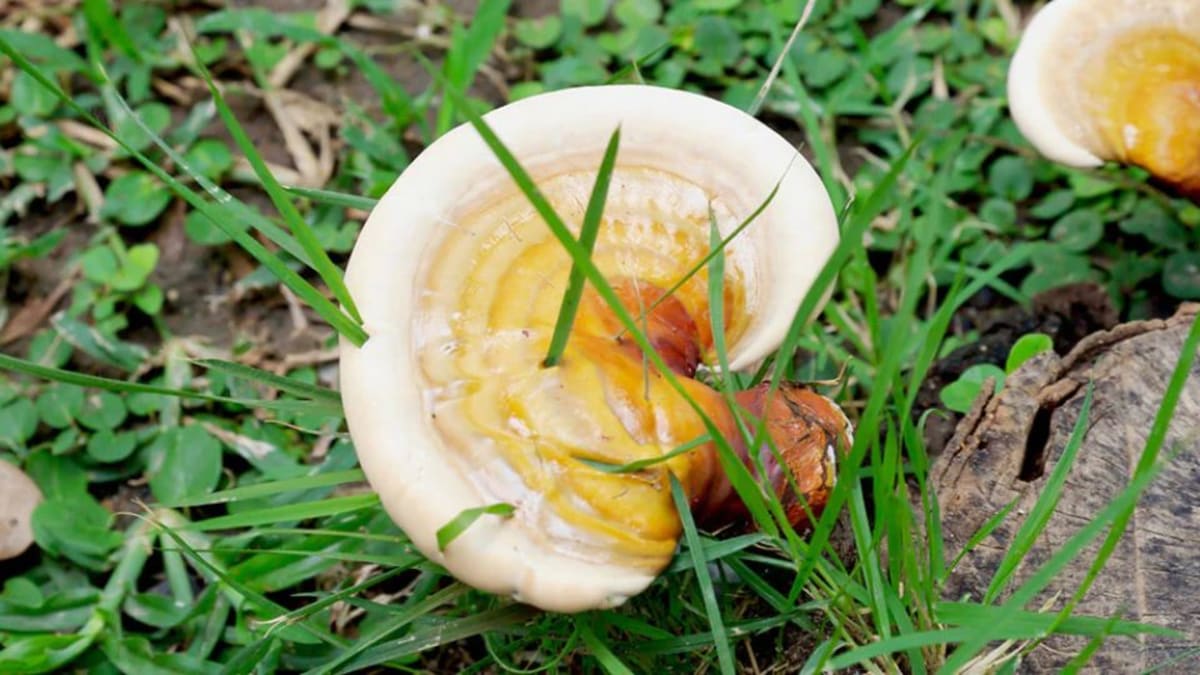
Ganoderma curtisii is a wood-decaying polypore native to the American South and East. We usually just call it Golden Reishi. We routinely find it feeding on dead hardwood stumps. It grows a varnished cap ringed by brilliant yellow and white bands. For decades North American foragers confused this regional fungus with the European Ganoderma lucidum, but modern DNA sequencing completely upended that assumption by proving our local populations represent an entirely independent lineage with a distinct biochemical signature. We have to use hot water and strong alcohol to break down those tough cellular walls. That frees the locked molecules.
Key Takeaways
- 1Ganoderma curtisii is a distinct North American species confirmed by DNA sequencing - true Ganoderma lucidum is a European fungus that rarely grows wild in the US
- 2A 2016 study isolated 29 lanostane triterpenoids from the ethanol extract, including 4 compounds never previously recorded in the entire genus
- 3The polysaccharide GCPS-2 protected neurons in the hippocampus and cortex by halting cellular apoptosis pathways in rat seizure models
- 4A dual extraction (hot water followed by ethanol soak) is required to capture both immune-modulating polysaccharides and anti-inflammatory triterpenoids
Taxonomy and Forest Ecology
Classifying laccate Ganoderma species in North America stayed chaotic for over a century. Early mycologists had a bad habit of labeling almost any glossy polypore on a hardwood tree as Ganoderma lucidum. That was a mistake. The true Ganoderma lucidum belongs in Europe. It does not grow wild in the United States outside of a few isolated introductions out in California or Utah. Today we know Ganoderma curtisii dominates the eastern deciduous forests. It loves the heat. High humidity fuels its growth.
A 2018 PLOS One study analyzed hundreds of wild collections to finally map these genetic boundaries. The researchers found a hard divergence between the continents. They also settled an old debate about a similar mushroom found on pine trees. Mycologists used to classify that pine-dwelling fungus as a completely separate species called Ganoderma meredithiae, but the DNA analysis proved this is actually the exact same organism expressing entirely different physiological growth patterns so it can digest coniferous wood instead of its usual oak or maple substrates. It just adapts.
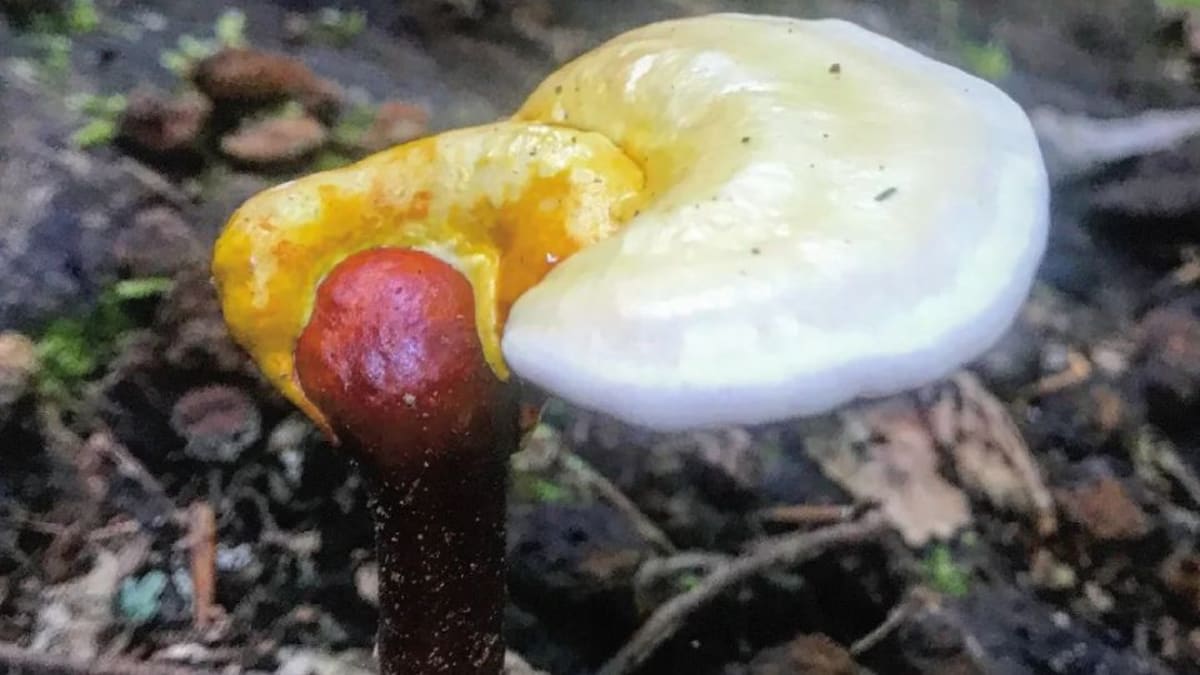
Field identification means looking past that shiny exterior. We hunt for a semi-circular cap where a red-brown base fades out into vivid ochre and white margins. The underside is packed with tiny white pores. Scratch them. They bruise deep brown almost instantly. The absolute most reliable macroscopic identifier hides deep inside the mushroom itself. Slice the cap open. The pale brown flesh will reveal dark melanoid bands running right through the tissue. We never see concentric growth zones in the flesh of this particular species. That internal architecture makes field identification reliable. It immediately separates our target fungus from Ganoderma sessile, which shares the exact same habitat but completely lacks those interior bands. We find these fruiting bodies popping up from late spring through early fall. They are saprotrophs. They eat dead logs.
Chemical Profile and Bioactive Compounds
What gives Golden Reishi its bite is a dense web of secondary metabolites. Older field guides tend to lump all varnished polypores together under a generic list of reishi health effects. We prefer to look at the exact molecules this specific organism builds. The chemical architecture here is heavy. It packs massive polysaccharides, alcohol-soluble triterpenoids, sterols, and raw phenolic compounds.
A 2016 Bioorganic & Medicinal Chemistry Letters paper isolated twenty-nine lanostane triterpenoids straight from the ethanol extract of Ganoderma curtisii fruiting bodies. The research team found four triterpenoids never previously recorded in the entire genus. They also mapped one entirely new compound. These molecules showed serious biological activity in the lab. The isolated triterpenoids inhibited nitric oxide production in microglia, which are highly specialized immune cells located within the brain and spinal cord that frequently drive damaging neuroinflammation whenever they get pushed into a chronically overactive state. The triterpenoids manage inflammatory conditions by choking off that runaway immune response.
Then we have the water-soluble fractions. Those contain the bulky polysaccharides. A 2019 pharmacological study mapped what a specific polysaccharide called GCPS-2 does when extracted from this mushroom. Researchers tested the compound on rats suffering from chemically induced seizures. The GCPS-2 extract protected neurons in the hippocampus and cortex from breaking down. It pulled this off by blocking the release of pro-inflammatory mediators and halting the cellular apoptosis pathways before they could cascade.
Commercial growers can manipulate the fruiting environment to force the mushroom to pump out more of these compounds. A 2022 Molecules study looked into liquid culture techniques for the fungus. Researchers dropped chemical elicitors right into the bioreactors. Exposing the liquid culture to extreme pH shifts or raw plant hormones caused the total antioxidant yield to spike. Stressed fungi synthesize defense molecules. They build these chemical shields fast. Cultivators can exploit this biological quirk to harvest massive concentrations of therapeutic compounds without waiting months for mature fruiting bodies to develop on decaying timber in the woods.
Cultivation and Extraction Protocols
Nobody eats this mushroom raw. We never toss it into a pan. The fruiting body is basically a block of tough chitin and woody fiber. The human digestive tract cannot break it down. A proper extraction is required.
A hot water decoction is the oldest trick in the book. We slice the dried caps into razor-thin strips to maximize surface area. Then we boil the pieces for two or three hours. This prolonged thermal exposure physically melts those thick chitin walls, allowing the boiling water to slowly drag the heavy polysaccharides out of the rigid fungal tissue and directly into the heavy medicinal brew. The resulting tea carries a sharp earthy-bitter bite. We usually cut the bitterness with crushed ginger. A spoonful of raw honey helps.
Boiling water leaves half the medicine trapped inside the fibers. Those lanostane triterpenoids are strictly soluble in alcohol. We rely on a dual-extraction protocol to pull the full spectrum of molecules. First we drown the dried mushroom slices in high-proof ethanol for four to six weeks. The alcohol strips out the sterols and triterpenoids. After straining off that amber tincture, we take the exact same alcohol-soaked mushroom pieces and boil them in water to pull the water-soluble polysaccharides. Mix the two liquids together. Now we have a potent dual extract.
Commercial farms are just starting to bring this species indoors. The mycelium runs aggressively through sterilized hardwood sawdust blocks spiked with wheat bran. We incubate the bags at a high room temperature. The fungus completely takes over the substrate in under three weeks. Dropping the temperature and pumping in fresh humid air triggers the fruiting cycle. The developing pins need a suffocating layer of carbon dioxide to stretch upward into antlers before they eventually flatten out into semi-circular caps coated in shiny red lacquer. We cut the mushrooms off the block the second those bright white outer margins start turning yellow. Harvesting at that exact moment guarantees the spores have not dropped yet. The tissue stays relatively tender for the grinder.
Safety and Known Side Effects
We treat every wild-foraged medicinal with a healthy dose of caution. The current clinical literature completely lacks long-term human safety trials dedicated strictly to this specific regional fungus. So we lean on the established safety baselines for the broader Ganoderma family. The chemical overlap is tight enough to predict the reactions.
These fungal extracts act as mild vasodilators. They bring blood pressure down. They also slow the body's natural blood clotting mechanisms. This cardiovascular interaction might help an average adult maintain healthy circulation, but it becomes a serious liability for anyone diagnosed with a bleeding disorder or patients taking prescription blood thinners for a heart condition. We never recommend taking these extracts right before a surgical procedure. The fungal compounds can severely amplify the thinning effects of prescribed anticoagulant drugs.
A small percentage of people suffer minor allergic pushback from the spores. We occasionally see complaints of dry mouth, an itchy throat, or minor skin rashes. Nosebleeds happen if the dose gets pushed too high. Our protocol is simple. Start with just a few drops of any new liquid extract and monitor for two full days before stepping up the volume.
The risk of liver toxicity remains rare. Still, anyone dealing with pre-existing hepatic impairment should clear this with a physician before taking high concentrations of alcohol-extracted triterpenoids.
Frequently Asked Questions
Gordon is a former high-tech researcher who traded his silicon chips for spores. With a background in molecular visualization, he spends his time mapping the intricate structures of medicinal fungi.
References & Further Reading
- Bioorganic & Medicinal Chemistry Letters 2016 — Bioorganic & Medicinal Chemistry Letters (2016)
- Pharmacogn J 2019 — Pharmacognosy Journal (2019)
- Molecules 2022 — Molecules (2022)
- PLOS One 2018 — PLOS One (2018)