 Mushroom Health Hub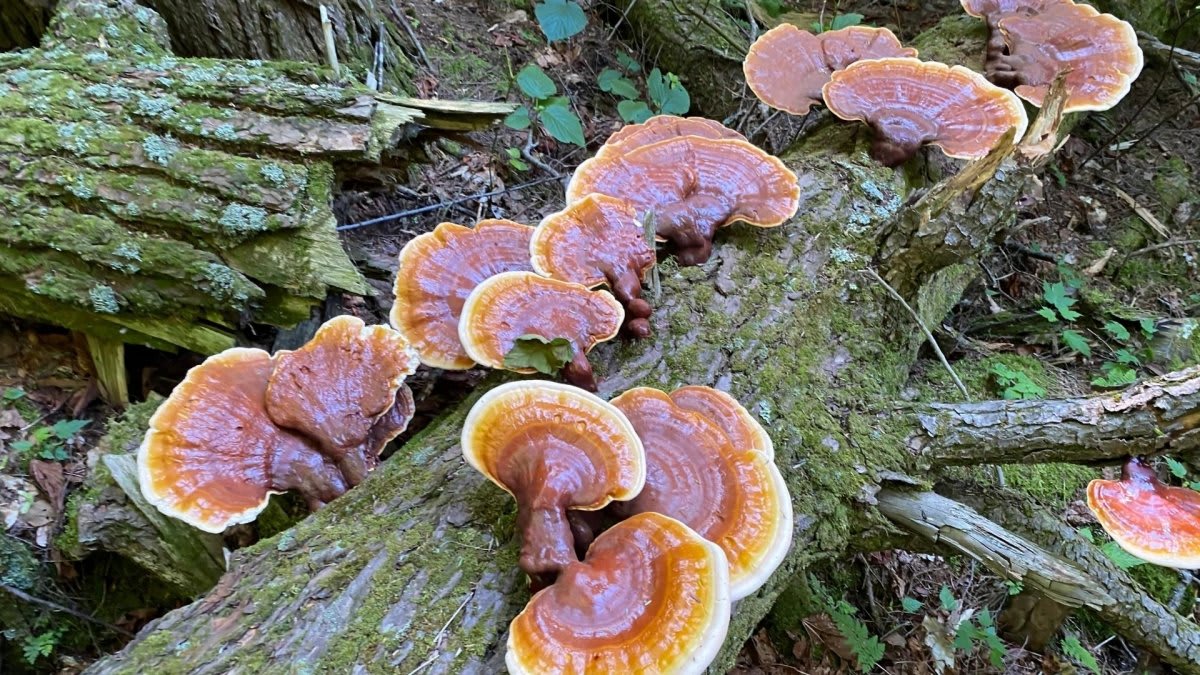
Spotting true reishi out in the woods means looking past that shiny red cap. Plenty of wild shelf fungi share that same varnished look. We put this guide together to map out the exact visual cues that separate real Ganoderma lucidum from the usual field imposters. You'll learn how to check spore prints. We walk through verifying hardwood habitats. We also dig into the widespread substitution problem happening right now in the commercial supplement market, a systemic quality control failure that leads to countless people buying pulverized grain mycelium instead of the bitter fungal triterpenes they actually need for health support.
Key Takeaways
- 1True reishi drops rust-brown spores, not white — a white spore print means a different species entirely
- 2Four common imposters share the varnished shelf look: red-belted conk, artist's conk, hemlock reishi, and stalkless reishi
- 3Most North American 'wild reishi' is actually Ganoderma sessile, a functional equivalent with the same ganoderic acids
- 4Commercial supplements routinely contain grain mycelium with no triterpenes — check for a bitter taste and third-party testing
The Truth About Reishi Identification
Nailing a reliable field ID comes down to habitat and physical structure. Most folks just scan the trees for a bright red cap. Big mistake. Color swings wildly depending on how old the specimen is and whatever the local weather happens to be doing that week. We track four primary characteristics when authenticating Ganoderma species in the wild.
True Ganoderma lucidum restricts itself almost entirely to decaying hardwood trees like oak and maple. It rarely touches living wood. Look closely. The mushroom pushes out a kidney-shaped cap with a tough outer crust that literally looks like someone painted it with a thick coat of gloss polyurethane. The underside lacks traditional gills. Instead you'll find a flat white surface packed with thousands of microscopic pores that dump millions of reproductive spores out into the surrounding wind currents during those muggy late summer months.
When reishi first pokes through the bark it looks like a weird white finger. Mycologists call this the antler stage. High carbon dioxide levels push the fungal tissue outward. Once the organism detects enough fresh airflow the tip flattens out to form that classic kidney-shaped shelf everyone recognizes from the field guides. The growing edge stays a pale yellow until the mushroom hits full maturity. Only the older tissue in the center develops that dark lacquer. Foragers need to recognize these growth stages. Snapping off an immature white antler robs the local ecosystem of future spores, and it leaves you holding a weak medicinal extract completely lacking the dense triterpene concentrations we look for in fully mature red fruiting bodies.
A shocking number of online guides publish flat-out bad information about the spore print. We see it all the time. Generic articles claim reishi drops a white print. Totally false. True Ganoderma species dump dense rust-brown spores. These microscopic particles usually end up coating the top of the mushroom cap itself and staining the surrounding grass with a thick layer of cocoa-colored powder. Finding a varnished shelf fungus dropping white spores tells you immediately that you have a different species on your hands, and we strongly suggest leaving that specimen alone rather than risking a highly unpleasant cup of wild woodland tea.
We always fall back on the taste test for our final verification. Genuine reishi packs an intense earthy bitterness. That sharp medicinal bite comes straight from the ganoderic acids. These triterpenes are exactly what researchers are looking at when they study the mushroom for cellular health. A 2024 study in the journal Molecules showed that prolonged heat treatments actually improved the water solubility of Ganoderma polysaccharides without wrecking those crucial bitter compounds. These compounds deliver the primary immune modulation associated with reishi. Brew up a batch and if the resulting liquid tastes mild or sweet, your harvest is missing the very elements that give the fungus its medicinal value.
Four Common Look-Alike Fungi
Even experienced foragers mess up sometimes. It happens. It is incredibly easy to mistake other shelf fungi for authentic reishi. We went ahead and mapped out the four most frequent overlapping species you might trip over in North American woodlands. Telling these imposters apart requires paying close attention to tree hosts, pore surfaces, the way they grow, and what part of the country you happen to be standing in when you find them.
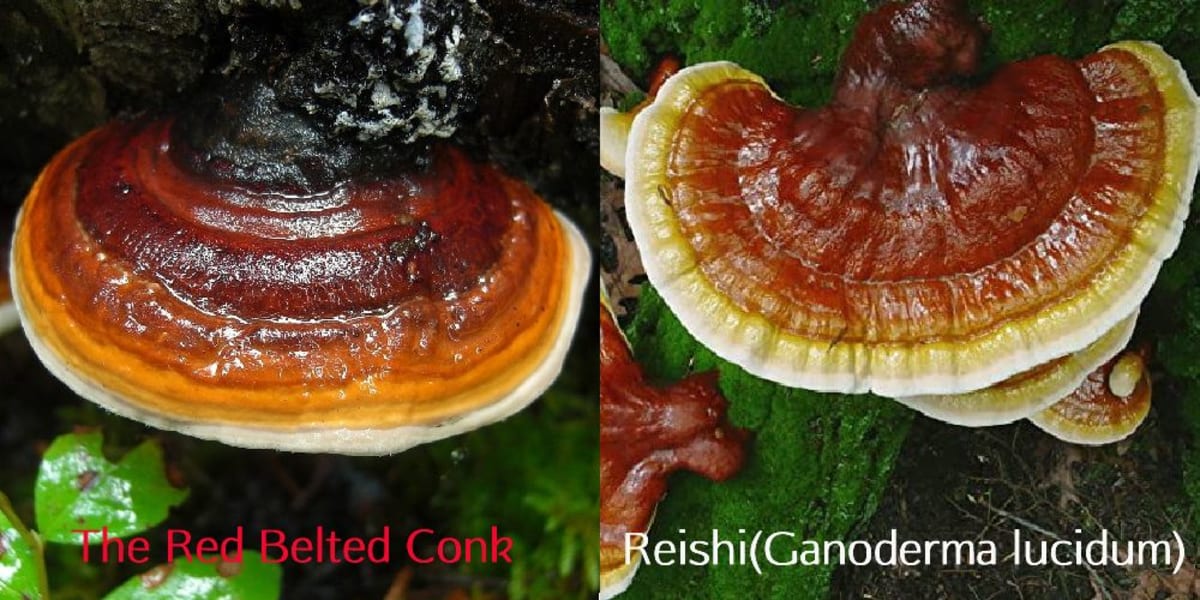
Red-Belted Conk (Fomitopsis pinicola)
This one tricks the novices. The red-belted conk routinely fools untrained hunters out in the damp woods. Just check the margin. A bright red band hugs the outer edge while the center fades to a dark gray. This species totally lacks that glossy varnished crust you want to see. It also colonizes dead coniferous trees. Ganoderma lucidum strictly prefers hardwoods. The fruiting body feels remarkably dense. It drops pale yellow spores. Slicing through an older red-belted conk usually requires an actual steel handsaw because the internal tissue turns to absolute wood after a few years of continuous perennial growth up in those cold northern climates.
Artist's Conk (Ganoderma applanatum)
Here we have a giant bracket fungus. The artist's conk actually shares a genus with reishi. Both pop up on decaying hardwood logs. But look at the cap. The artist's conk skips the red coloration entirely. Its top surface stays a dull drab brown or gray. It never develops that shiny outer crust. We call it the artist's conk because the bright white pore surface underneath bruises dark brown the second you touch it. People literally draw on them. Drag a fingernail across the bottom and it leaves a permanent mark. True reishi pores might darken a shade if you really crush them but they never give you that instant high-contrast bruising. A 2023 study in the Microbial Journal confirmed that while this giant fungus does carry some basic polysaccharides, it entirely lacks the medicinal triterpene density we expect to find inside its famous red cousin.
Hemlock Reishi (Ganoderma tsugae)
Hemlock reishi is easily the closest visual match out there. It flashes that exact same shiny red cap. It drops the same rust-brown spores. We really only tell them apart by looking at where they decided to grow. Like the name implies, Ganoderma tsugae sticks exclusively to dead hemlock trees and other conifers hidden deep in old-growth forests. Crack one open and the internal flesh looks bright white. It also feels a lot softer than true reishi. We consider this a totally safe imposter. Herbalists actively harvest hemlock reishi all the time. It carries plenty of beneficial compounds. Mistaking a hemlock reishi for the real deal still leaves you with an extract of strong functional value, assuming you take the time to break down that rigid fibrous tissue properly with a long hot water decoction followed by a high-proof alcohol soak.
Stalkless Reishi (Ganoderma sessile)
Countless North American foragers swear they just found wild Ganoderma lucidum. They are almost always wrong. True Ganoderma lucidum is strictly native to Europe and Asia. That beautiful red mushroom growing on the local oak stump is probably Ganoderma sessile. We consider this a highly valid functional equivalent. It certainly isn't a dangerous imposter. Stalkless reishi looks practically identical to the overseas species. It sports the same red varnished cap. It drops the same rust-brown spores. Just like the scientific name suggests, it just happens to lack the long stem you see on the cultivated Asian varieties. The cap attaches itself flush against the tree bark. A 2024 analysis of Ganoderma species confirmed that Ganoderma sessile packs the exact same beneficial ganoderic acids and immune-modulating beta-glucans as its famous cousin, making it an incredible find for any serious woodland herbalist out on a hike.
The Real Danger in Reishi Supplements
Digging around in the woods for wild fungi obviously carries some inherent risks. But we actually found the greatest danger sitting quietly on retail store shelves. A shocking number of commercial supplements just leave the actual mushroom out of the bottle entirely. The US Pharmacopeia published a major quality control study looking at commercial reishi products. They pulled various samples off the market for testing. The results were frankly embarrassing. Only a tiny fraction actually contained the bioactive components of genuine reishi. The rest were just cheap related species or straight grain-based mycelium. This systemic quality failure is exactly why we prioritize third-party testing and direct-source verification when sourcing supplements for long-term use.
We watch this industry practice like a hawk. Large manufacturers will grow fungal mycelium on cheap oat substrates. They grind up the entire unfermented grain block. Then they cap it and sell it as a premium health supplement. This starchy powder completely lacks the bitter ganoderic acids that only show up when the fungal organism forms a fully mature, expanded fruiting body. People end up paying top dollar to swallow ground oats. A 2023 study in the Microbial Journal stressed how vital chemical verification has become, noting that only the mature fruiting body provides the specific pharmacological compounds linked to cardiovascular health and immune modulation.
Our Field Verification Protocol
Over the years we developed a pretty rigid protocol for checking wild reishi. Sticking to these steps keeps us from dragging home a useless harvest. The verification process takes roughly 10 to 15 minutes per specimen once you know what to look for. First things first, we ID the host tree. If that tree is a living conifer, we just keep walking. We only stop to look closer if the fungus is attached to a dead hardwood. Next up we check the texture of the cap. It absolutely has to look shiny and varnished. A dull matte surface means you are looking at a completely different polypore.
Then we move on to the scratch test. We run the tip of a pocket knife across that white pore surface. Those pores might darken a shade or two. But they should never turn dark brown the second you touch them. Immediate dark bruising always points straight to the artist's conk. Finally we take a spore print. We lay the cap flat on white paper and trap it under a heavy glass bowl. A thick rust-brown deposit needs to be sitting there waiting for us by morning. Finding white spores means the whole specimen goes straight into the compost bin. We only bother checking for that signature bitter taste after the physical cap characteristics and the spore drop flawlessly match the strict botanical profile of Ganoderma lucidum outlined in the mycology texts.
Frequently Asked Questions

A dedicated wellness researcher who spent decades cataloging the impact of forest-based nutrition on human aging. Ashley doesn't care about trends; she cares about the data.