 Mushroom Health Hub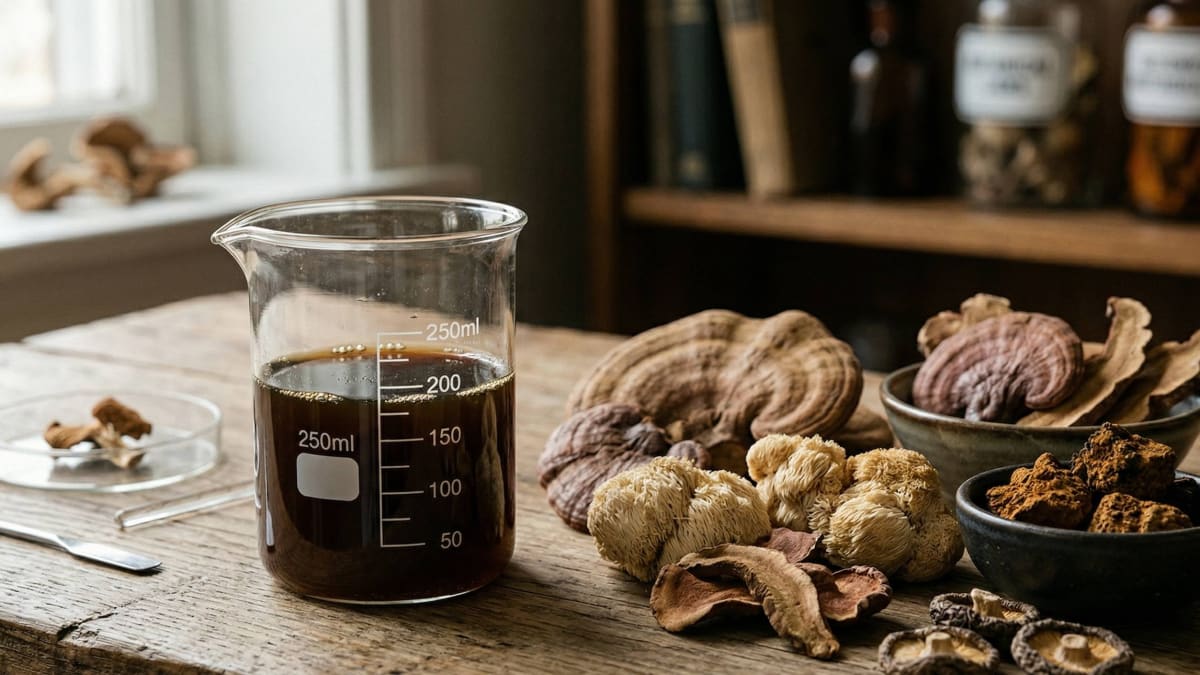
Most mushroom products on store shelves are useless. Buy the wrong jar, and you get nothing. We see this happen all the time when buyers misunderstand the actual extraction mechanics. Hot water soaking uses steady heat to break apart thick fungal cell walls and draw out those immune-supporting beta-glucans, while a dual method pushes things a massive step further by adding a harsh alcohol steep that grabs hold of the oily compounds ordinary water leaves behind.
Key Takeaways
- 1Hot water extracts beta-glucans. Alcohol extracts triterpenes. These two compounds need completely different solvents
- 2Reishi and chaga require dual extraction. Without the alcohol phase, the triterpenes driving their adaptogenic effects stay locked in the cell walls
- 3Turkey tail does not benefit from dual extraction. Its active compounds are water-soluble, and alcohol can actually degrade them
- 4Manufacturers must complete the hot water phase before the alcohol phase. Reversing the order destroys the beta-glucans
The Chemistry Behind the Extraction
Fungi construct their cellular walls out of chitin. That is the same biological armor protecting ocean crabs. Human stomachs cannot process it. If we look at dried powder passing through the digestive tract, the therapeutic elements stay trapped inside those impenetrable walls.
Heat strips the armor away. A long rolling boil handles this perfectly. Soaking fungi in hot water is the oldest and frankly most reliable tactic we have for isolating beta-glucans, which are those complex sugars that may support immune system training. They melt instantly in hot liquid. Heat hits the chitin shell and releases the sugars right into the brew.
But standard water cannot dissolve everything. A few medicinal species manufacture thick, oily compounds called triterpenes that actively repel moisture. We track these molecules because they drive the adaptogenic effects observed when researchers test fungi for stress modulation. Pulling them out requires a much harsher solvent. Pure alcohol rips through the fat-soluble triterpenes and drags them into the mix.
Dual extraction solves the solvent problem. The lab boils the raw biomass first to catch the water-soluble fractions, and then they take that exact same leftover fungal mass and drown it in high-proof ethanol for several consecutive weeks, which violently forces those stubborn triterpenes out of hiding before the two separate liquids finally get mixed together. This intense two-step protocol demands heavy industrial equipment and extends the production timeline by nearly a full month.
Powders vs Tinctures
The actual mushroom species tells us exactly which method to demand. You will usually find these products bottled as dark tinctures or packaged as dry powders.
Reishi and chaga absolutely require dual extraction. Both grow as incredibly dense, woody conks clinging to tree trunks. Surviving those harsh outdoor environments means they produce massive concentrations of triterpenes as a defense mechanism. We often see cheap reishi supplements that only ever saw a quick hot water bath, meaning they completely lack the therapeutic compounds that research indicates may support stress hormone regulation. The alcohol steep is completely non-negotiable for these two species.
Dark glass tinctures hold these double extracts brilliantly because the residual alcohol suspends those oily compounds right in the fluid. Making a dry powder version forces the manufacturer to spray-dry the combined liquid inside a massive industrial heating chamber until absolutely every drop of moisture vanishes into the air, leaving behind an incredibly potent residue that captures both water and alcohol fractions. People love the powder format since it dissolves instantly into morning coffee. Just read the back of the bag. Bargain brands frequently skip the expensive alcohol phase to cut their overhead costs while still charging fifty dollars for what amounts to a bag of sterilized sawdust.
For a deeper look at the format tradeoffs, see our breakdown of mushroom tinctures vs powder.

When Hot Water Works Better
Turkey tail flips the entire script. Pure alcohol is completely useless here.
The active ingredients making turkey tail famous are polysaccharide-K and polysaccharopeptide. These massive beta-glucans operate strictly as water-soluble compounds. A 2022 study published in the journal Viruses found that simple hot water extracts of Trametes versicolor successfully delivered these complex beta-glucans and activated immune cells against viral threats without any researchers needing to introduce secondary chemical solvents. The lab team relied solely on standard boiling water to isolate the defensive sugars.
Drowning turkey tail in a vat of alcohol just wastes everyone's time and money. It gets worse. Soaking the whole batch in harsh ethanol during the manufacturing run can actually degrade those fragile beta-glucans before the bottle even makes it onto a store shelf. Stick to the single extract. We constantly see aggressive marketing teams charging seventy dollars for a premium dual extract of turkey tail. The fungus itself barely contains any triterpenes to justify a single drop of alcohol.
The same logic applies to lion's mane. Its neuroactive compounds, hericenones and erinacines, are primarily water-soluble. A clean hot water extract covers the full therapeutic profile. See our guide on what beta-glucans actually do for the full immunological picture.
Frequently Asked Questions
Gordon is a former high-tech researcher who traded his silicon chips for spores. With a background in molecular visualization, he spends his time mapping the intricate structures of medicinal fungi.