 Mushroom Health Hub
Does MUD WTR Actually Work? A 30-Day Energy and Taste Test

We may earn a commission if you make a purchase through links on this page. This helps support our testing methodology. Learn more.
Affiliate Disclosure: Mushroom Health Hub earns commissions from qualifying purchases made through links on this page. This supports our lab testing and does not affect our recommendations. We only recommend supplements that pass our quality standards. Learn more
Most people expect an instant miracle from mushroom coffee. We tested MUD WTR daily for a full month. The first week does almost nothing. To cut through the relentless social media hype and find out what it actually does, we tracked our energy levels against a regular dark roast baseline, mapping our mental clarity at thirty minutes, one hour, two hours, and four hours after drinking it. Is it really worth fifty bucks a tin? We bought a starter kit to see for ourselves.
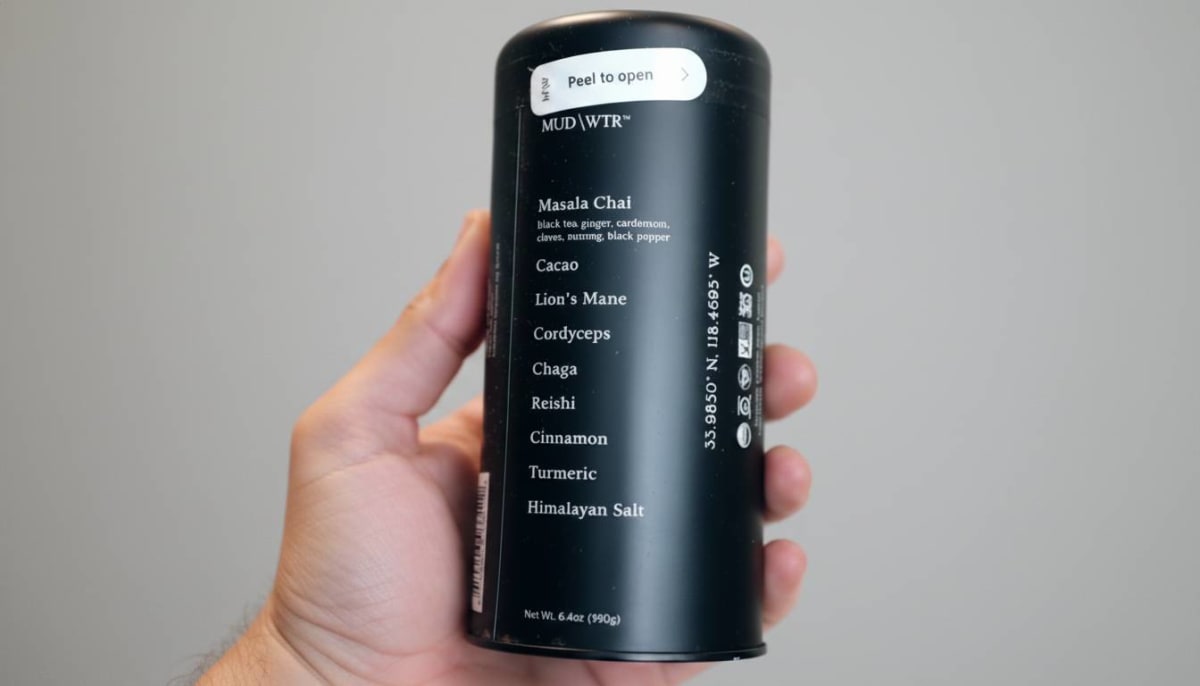
Each scoop delivers 2,240mg of functional mushrooms split into equal 560mg doses of lion's mane, cordyceps, chaga, and reishi. The blend draws caffeine naturally from black tea and cacao, landing at 35mg per serving. One tin runs $50 at the one-time price, with a USDA Organic, Non-GMO, vegan, and Whole30 certification stack to back up the premium label.
The Quick Take
- 130-day protocol tracking energy at 30min, 1hr, 2hr, and 4hr against a regular coffee baseline
- 2Adaptogenic effects become noticeable in week 3 - the first week feels underwhelming
- 3Taste evolves from medicinal on day 1 to genuinely enjoyable by day 30
- 4Tin yields 24 actual servings not the 30 advertised - real cost is $2.08 per cup
- 5Subscription cancels in one click - no retention maze, no waiting period
Product Overview
MUD WTR positions itself as a coffee alternative rather than a mushroom coffee. The distinction matters. This is a masala chai and cacao drink with adaptogens added, not coffee blended with mushroom extract. The four mushroom species share equal billing in the formula at 560mg each, which makes it one of the more evenly distributed blends in the category. The manufacturer relies on both mycelial biomass and fruiting bodies grown on organic oats, standard for this price point but worth noting if you prefer pure fruiting body extracts.
Technical Snapshot
30-Day Energy Tracking
Setting up a proper baseline was critical. For the first seven days we alternated between our standard dark roast and the mushroom blend. We logged physical energy and mental clarity at thirty minutes, one hour, two hours, and four hours after each first sip.
Coffee strikes fast. MUD WTR builds slowly. Our morning brew delivered a massive surge within thirty minutes followed by a brutal slump at the two-hour mark, while the adaptogenic drink created a gentle hum of alertness that carried us through long afternoon writing sessions without a single jitter. At the thirty-minute mark on MUD WTR days, we felt absolutely nothing. By hour two on coffee days, we were tapping our feet and losing focus entirely.
During week three, the adaptogenic effects became much more obvious. We stopped looking for the harsh jolt of a traditional stimulant. The four-hour mark felt entirely different on mushroom days since we experienced no afternoon crashes and focus remained steady. Shifting from highly caffeinated mornings to this subtle hum takes patience. The body needs time to adjust down to 35mg.
Pro Tip
Give it three weeks before judging effectiveness. The energy shift is gradual and cumulative. Testers who quit after the first week miss the period where the adaptogens actually kick in.
Taste Evolution and Blind Testing
Expect to hate your first cup. Our initial mug on day one tasted aggressively medicinal and left us wondering why anyone would swallow this stuff voluntarily. The heavy masala spices overwhelmed the palate, leaving a sharp bitterness that clung to the back of the throat for an hour.
By day seven, things started to shift. The raw cacao and cinnamon notes pushed through that harsh earthiness right around the middle of week two. When we hit day thirty, we genuinely preferred this complex spiced profile over our usual morning drip coffee.
We ran a blind taste test comparing MUD WTR Original against RYZE and Everyday Dose. The results caught everyone off guard. Everyday Dose easily passed as a standard creamy latte. RYZE tasted like weak instant coffee mixed with garden soil. MUD WTR abandons the coffee illusion completely to lean into spicy chai and unsweetened chocolate, which means you have to accept it as an entirely separate beverage category to enjoy it.
The Sediment Problem and Preparation Solutions
The grit is undeniably real. Casual spoon stirring leaves bitter sandy residue at the bottom of the mug. We ran six preparation methods trying to solve this famous texture complaint.
A manual whisk failed. The dense botanical powders sank right back to the bottom within two minutes. The included electric frother improved the mouthfeel slightly by breaking up clumps, but the liquid still felt thin and grainy.
Everything changed when we combined the electric frother with hot oat milk. The heavy milk fats suspended the powders perfectly from the first sip to the last drop, while the creamy texture masked any remaining earthiness. If you refuse to use milk or a blender, the sediment will sit stubbornly at the bottom of your glass every single time.
Warning
Do not buy this product if you refuse to use a frother. The included rechargeable frother is not optional equipment. It is a mandatory preparation tool. Spoon stirring produces a genuinely unpleasant texture.
Formula and Value Verification
Social media ads constantly repeat the "one-seventh the caffeine of coffee" claim. We checked the label. It holds exactly 35mg per serving, which is roughly one-third of a standard 8oz cup, not one-seventh. The fraction varies depending on which coffee you compare against. Having the actual number matters more than the marketing fraction.
The tin promises thirty servings. We counted them using a level tablespoon as instructed. The tin yielded only twenty-four complete scoops. This basic math error raises the true cost from the advertised $1.67 per cup to $2.08 per cup. At that price it runs significantly more expensive than RYZE at $1.50 per serving or Everyday Dose at $1.33 per serving.
We requested a Certificate of Analysis to verify active mushroom content and heavy metals. Customer service pointed us toward their basic organic certifications and did not provide a batch-specific lab report. Quality mushroom supplements typically show greater than 20% beta-glucans on verified lab reports. Those active polysaccharides are the compounds tied to immune and cognitive function. Without batch-specific testing, there is no way to confirm the medicinal potency of this blend. This refusal to share accessible testing data is a frustrating gap for a premium health product when competing brands publish lab results directly on their homepages.

Flavor Varieties and Use Cases
The brand sells several variations. We tested three. The Original blend works best for early morning energy. The Matcha version steps up to 55mg caffeine to carry you through long afternoon work sessions. The Rest formula uses a caffeine-free rooibos base. It helped wind down before bed during the final week of our protocol.
Who Should Buy This
Best for: Caffeine-sensitive drinkers who genuinely enjoy spicy chai and cacao flavors. The 35mg dose paired with four adaptogens delivered stable energy throughout our workday with zero jitters or anxiety. If afternoon crashes are a persistent problem with regular coffee, the flat energy curve we tracked across thirty days makes a compelling case. The subscription cancellation process is frictionless and the frother that ships with the starter kit is genuinely high quality.
Skip if: You need the familiar taste of dark roast coffee in the morning. This is not a coffee substitute in any sensory sense. Also skip if you require transparent lab data before spending on a premium supplement, if texture sensitivity is a concern, or if the real per-serving cost over two dollars sits outside your budget.
The Good
- Flat, jitter-free energy curve with no afternoon crash across 30 days of tracking
- Subscription cancels instantly with a single online click, no retention tactics
- Included rechargeable frother eliminates sediment when used with hot oat milk
- Taste genuinely improves with use - day 30 is a completely different experience from day 1
The Bad
- Tin yields 24 servings not the 30 advertised, raising real cost to $2.08 per cup
- Company declined to provide a batch-specific Certificate of Analysis for mushroom content
- Spoon stirring is inadequate - gritty sediment without a frother is a dealbreaker for many
Premium Chai That Works, Priced Beyond Its Value
MUD WTR is a premium chai and cacao drink masquerading as a coffee alternative. The energy delivery is real and the subscription model is genuinely fair. The problems are the inflated serving count on the tin, the refusal to publish batch-specific lab data, and a price per cup that is hard to justify when competing products deliver better transparency at lower cost.
- Flat, jitter-free energy tracked at 30min, 1hr, 2hr, and 4hr across 30 days
- Blind taste test confirms it requires acceptance as chai, not coffee
- Tin yielded 24 servings not 30 - real cost $2.08 per cup