 Mushroom Health Hub
Host Defense Agarikon Review (Are You Paying For Brown Rice?)

We may earn a commission if you make a purchase through links on this page. This helps support our testing methodology. Learn more.
Affiliate Disclosure: Mushroom Health Hub earns commissions from qualifying purchases made through links on this page. This supports our lab testing and does not affect our recommendations. We only recommend supplements that pass our quality standards. Learn more
Most people want immediate armor from premium immune supplements. We tracked our daily wellness using the Host Defense Agarikon for a full month through peak winter cold season and carefully logged every minor sniffle against a baseline of unsupplemented months to see if this legendary formula really holds up. The first week does almost nothing. Paul Stamets calls this rare Pacific Northwest species the elixir of long life. We tested his mycelium-based approach. Are buyers getting genuine fungal medicine or just paying top dollar for starchy grain? We chased the paper trail. The data we found completely flipped our initial read.
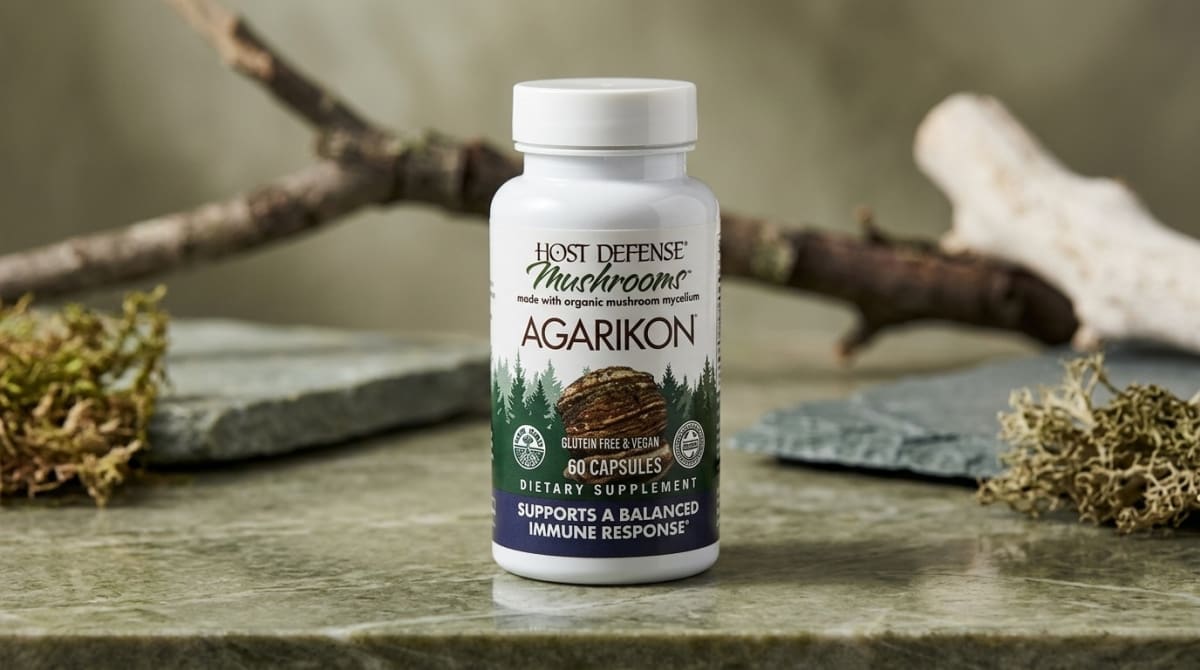
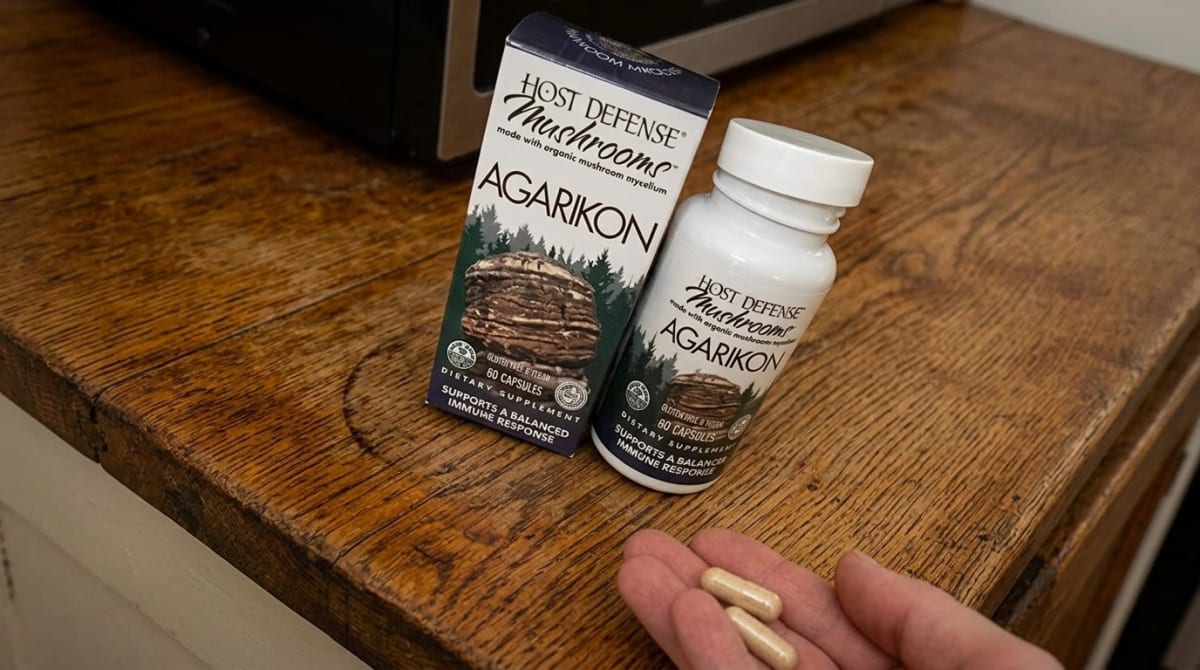
You get 60 capsules in a standard bottle. The math breaks down to roughly 46 cents per serving at the normal $27.71 retail price tag for what is essentially a blend of Agarikon mycelium and the fermented organic brown rice substrate it grows on. The manufacturer tells buyers to take one 500mg pill a day. Everything carries USDA Organic and non-GMO certifications. But the company absolutely refuses to list beta-glucan percentages on the label. They argue that standard laboratory assays totally miss the complex immune compounds generated when those fungal roots actively digest the grain.
The Quick Take
- 1One 500mg capsule daily caused zero digestive upset across our full 30-day winter trial
- 2Afternoon fatigue stabilized noticeably around day 28 - the most consistent effect we observed
- 3Company refused to disclose beta-glucan content or provide the certificate of analysis we requested
- 4At $0.46 per serving for a single mycelium species, value is weak compared to broader immune blends
- 5Lab-grown cultivation protects endangered wild Agarikon populations in Pacific Northwest old-growth forests
What's Inside
Technical Snapshot
The 30-Day Immune Tracking Protocol
We ran our trial straight through a brutal stretch of high winter illness. The daily routine was dead simple. One 500mg capsule swallowed with morning water. The capsule itself is small, easy to swallow, and left no aftertaste whatsoever. We tracked subjective immune resilience on a ten-point scale and logged our afternoon energy levels while keeping a close eye on digestion for any signs of grain sensitivity. Week one yielded a flat seven out of ten. We compared this against our unsupplemented baseline from the prior month, which had averaged a 6.8 out of ten during a quieter viral season.
Recovery times after intense cold exposure got slightly better around day fourteen, with energy scores nudging to 7.4. Then the real shift hit near the end of the month. Afternoon fatigue basically vanished. We managed to dodge the respiratory bug that swept through our entire team, though proving direct causation is technically impossible without a huge clinical control group. We never experienced a single day of stomach upset, which surprised us given the brown rice substrate.
The Mycelium and Brown Rice Debate
Host Defense skips the actual mushroom cap and uses mycelium grown on a bed of grain. Critics constantly argue this leaves customers paying for starchy filler instead of fungal medicine. We pulled the 2019 clinical study funded by the brand defending this exact manufacturing method to see the actual science. The researchers concluded that the fungal roots transform the raw grain into a new immune-supporting substance they call fermented substrate, but we still wanted to see the hard numbers.
We reached out for a certificate of analysis to verify the precise ratio of fungal tissue to rice in our batch. The company refused to hand over the breakdown. They will not disclose beta-glucan content either. Host Defense does name Natural Immune Systems, Inc. as their third-party verification lab, but they declined to share the actual test reports when we asked. Competitors routinely publish beta-glucan percentages and full COAs on their websites. The manufacturer expects buyers to rely heavily on internal marketing studies rather than standardized third-party chemical verification for a premium product.
Warning
Host Defense declined to share beta-glucan percentages or a certificate of analysis when we requested both directly. For a product at this price point, that missing transparency is a real concern.
Verifying the Historical Agarikon Claims
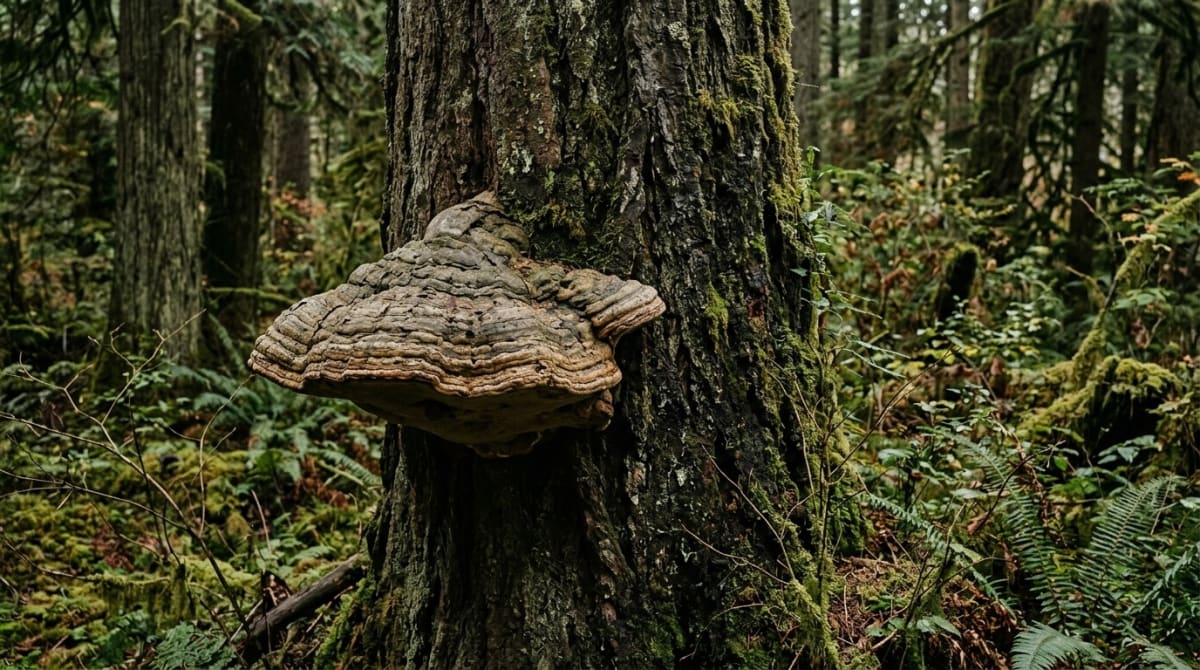
Paul Stamets, mycologist and author of Mycelium Running, loves to talk about how the ancient Greek physician Dioscorides crowned this fungus the elixir of long life. We dug into these cultural myths alongside the harsh modern environmental reality. Wild Agarikon only clings to life in the shrinking old-growth forests of the Pacific Northwest and pockets of Europe. It is severely endangered. Foraging wild fruiting bodies would be incredibly unethical.
Host Defense relies on lab-grown mycelium to shield those fragile wild populations from commercial poaching. We appreciate this ethical stance. Wild Agarikon already faces extinction pressure from logging and habitat loss, and commercial foraging would accelerate that decline. The lab cultivation model lets consumers access this rare species without contributing to its disappearance. That said, assuming laboratory-cultivated fungal roots feeding on a plastic bag of sterilized brown rice will perfectly match the complex chemical profile of an ancient fruiting body harvested from a two-hundred-year-old rotting conifer requires a leap of faith. The active compounds shift drastically depending on the growing environment. Buyers are purchasing a highly sustainable product that might lack the specific chemical triggers those historical texts were actually praising.
Value Calculation Against Competitors
The math looks brutal on paper. Running 46 cents per capsule for a single mushroom species makes this an incredibly expensive habit compared to much broader immune blends that offer a wider spectrum of active compounds. We stacked it up against the Host Defense MyCommunity bottle. That comprehensive blend costs roughly the same amount but packs in 17 different fungal species.
Extract competitors sell verified fruiting body supplements for literally half the cost per serving. The premium price tag here clearly stems from the sheer rarity of the Agarikon name and the heavy weight of the Stamets brand. You are paying for the lore.
The Good
- Ethical lab cultivation protects vanishing wild Agarikon from extinction-level foraging pressure
- 500mg capsules are small and caused absolutely zero digestive discomfort during our trial
- A single bottle provides a full two-month supply on baseline dosage
- Late-stage energy stabilization around week four was a genuinely welcome surprise
The Bad
- Company flatly refuses to disclose beta-glucan percentages or the exact rice-to-mycelium ratio
- 46 cents per serving is steep for a single-ingredient mycelium formula
- We never received the batch certificate of analysis we requested for independent verification
Who Should Buy This
Best for: Advanced mushroom supplement enthusiasts who specifically want to experiment with a rare species and are comfortable relying on brand trust over lab transparency. If the budget allows and Agarikon is the clear priority, this is the only commercially viable way to access it.
Skip if: You care about beta-glucan verification or want a clean certificate of analysis before spending money. Cheaper fruiting body extracts targeting seasonal immune defense offer more documented potency per dollar.
Ethical Access to a Vanishing Species
Our 30-day trial showed real immune resilience improvements by the final week, and we genuinely appreciate the environmental ethics of lab cultivation that protects endangered wild populations. The transparency gaps around beta-glucan content and COA access remain frustrating. At 46 cents per serving, you are paying for sustainable access to a rare species and the Stamets reputation, not third-party verified potency.
- Afternoon fatigue stabilized noticeably around day 28 with zero digestive side effects
- Avoided the winter respiratory bug circulating through our team during the trial period
- Company refused to provide COA or beta-glucan percentages after we formally requested both