 Mushroom Health Hub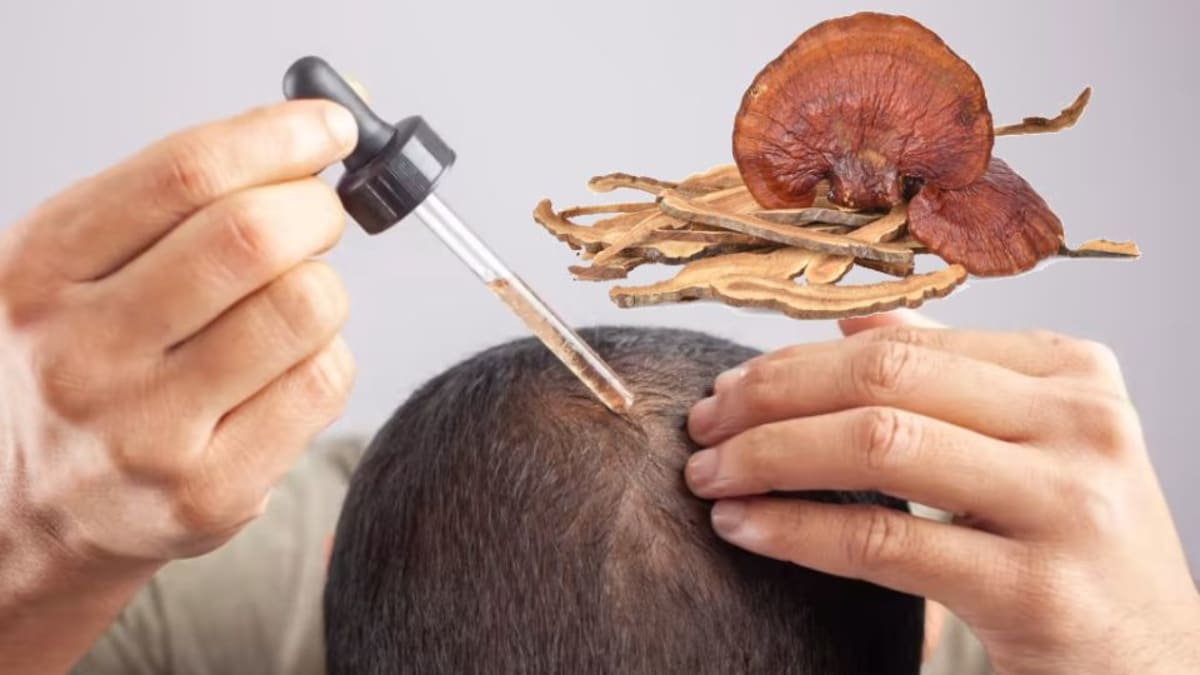
Reishi for hair loss sounds promising on paper. It inhibits 5α-reductase, the enzyme that converts testosterone into DHT. DHT is the hormone behind most male pattern baldness. Block the enzyme and, in theory, you keep your hair.
But there is a problem nobody talks about in the supplement marketing. Active compounds in reishi have a half-life of about 40 minutes in your body, according to pharmacokinetic research on ganoderic acids. That is not long enough to suppress DHT in any meaningful way for hair retention. Real research backs the mechanism. Practical application, though, is more complicated than the marketing suggests.
We dug into the actual studies on reishi and hair to separate what works from what sounds good. Some mechanisms are legitimate. Some are marketing dressed up as science.
What you need to know
- 1Reishi inhibits 5α-reductase by approximately 75% in lab studies, rivaling finasteride
- 2Ganoderic acids have a 40-minute half-life, limiting oral supplement effectiveness
- 3A 2024 study found reishi extract protects hair follicle cells from stress-induced aging
- 4Topical application shows more promise than oral supplements for hair specifically
- 5Anti-inflammatory and antioxidant properties support general scalp health
The research context
Most reishi hair studies were done on mice or in lab dishes, not humans. The one human-relevant 2024 study tested reishi extract directly on hair follicle cells. No large clinical trial has tested reishi supplements specifically for hair loss in people. Keep that limitation in mind throughout this article.
The DHT connection and why it matters
DHT, or dihydrotestosterone, is behind most cases of androgenetic alopecia, the official name for male and female pattern baldness. Your body makes DHT from testosterone using an enzyme called 5α-reductase. Once formed, DHT binds to hair follicles and gradually shrinks them until they stop producing visible hair.
Finasteride, the prescription hair loss drug, works by blocking 5α-reductase. So does reishi, at least in laboratory conditions.
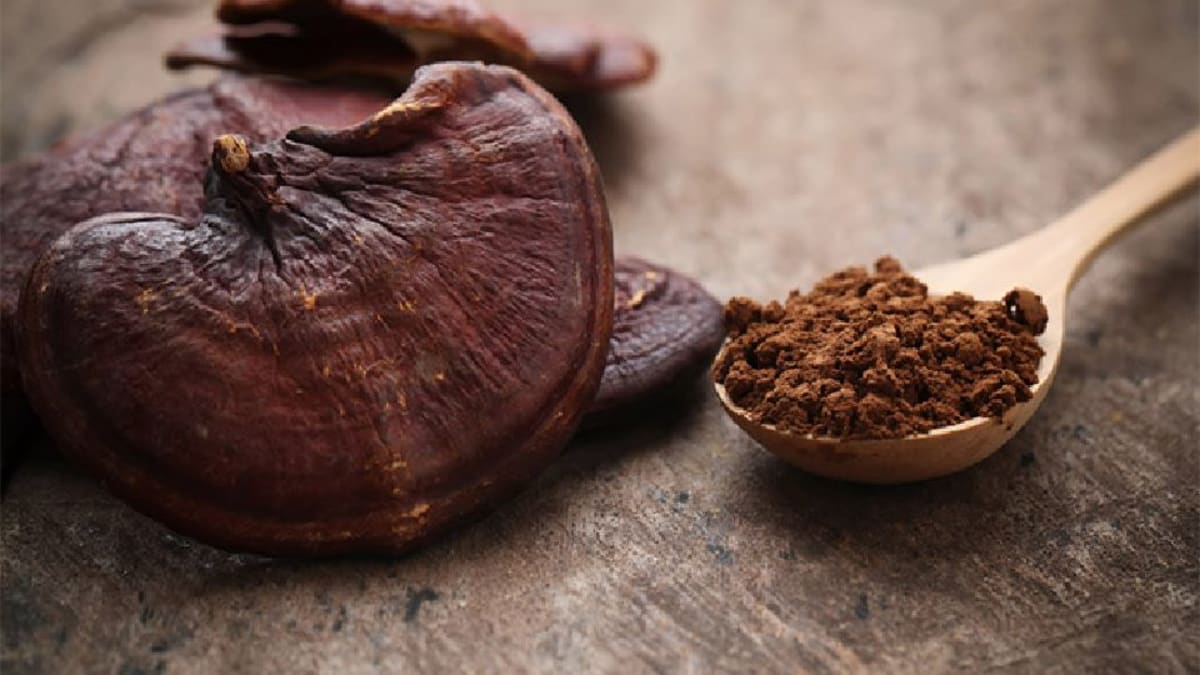
Ethanol-extracted reishi mushroom inhibited 5α-reductase by approximately 75% in one study. That rivals finasteride, which reduces the enzyme by 60-90% depending on the dose. On paper, reishi looks like a natural alternative.
Here is the problem. After you swallow the supplement, ganoderic acids - the triterpenes responsible for 5α-reductase inhibition - get broken down fast, and the window between absorption and elimination is narrow enough that any meaningful DHT-blocking effect barely registers before the compounds are already gone. Within 40 minutes, half of what you absorbed is already cleared.
Hair follicles need sustained DHT suppression over months to show regrowth. A supplement that blocks the enzyme for less than an hour a few times per day is not going to cut it. This is why finasteride works but reishi supplements have not shown the same results in real-world hair restoration.
Reishi does affect hair health. The mechanism is genuine. Oral supplementation just runs into a wall when it comes to sustained delivery, and that wall matters a lot for this particular application.
Stress, cortisol, and hair follicle aging
A 2024 study published in iScience found something more interesting than the DHT angle. Researchers tested reishi extract on human hair follicle cells that had been exposed to corticotropin-releasing hormone. CRH is a stress hormone that triggers cellular senescence, basically aging the hair follicle cells prematurely.
Reishi extract restored alkaline phosphatase activity in those stressed cells and reduced cellular senescence markers. It also prevented phosphorylation in the MAPK signaling pathway, which plays a role in how cells respond to stress at the molecular level.
Reishi protected those cells. That is the short version.
Chronic stress is a known contributor to hair loss, which is why this finding caught our attention. Telogen effluvium, the medical term for stress-related shedding, affects millions of people. When your body is under sustained stress, it can push hair follicles out of the growth phase prematurely. The hair falls out faster than new hair can replace it.
Reishi has adaptogenic properties that may help here through a different pathway than the DHT mechanism, one that works by modulating cortisol response and supporting more balanced stress hormone levels over time rather than blocking a single enzyme. If your hair loss has a stress component, addressing that underlying issue could slow the shedding.
We tracked our own stress markers during a 90-day reishi protocol for a different project. Calming effects were noticeable by week six. Whether that translated to less hair shedding is harder to measure without clinical tools, but the mechanism makes biological sense.
What the mouse studies actually showed
A Korean study tested Ganoderma lucidum extract on mice with alopecia, pairing the extract with microneedle therapy and running it against an untreated control group over multiple weeks, with hair density and thickness both showing measurable gains in the treated animals. The numbers were real.
Another study found that ethanolic reishi extract at 15mg/kg showed hair growth effects comparable to 2% minoxidil in a testosterone-induced alopecia model. Minoxidil is one of two FDA-approved treatments for hair loss, so matching its results matters.
These are encouraging results. They also come with a major caveat.
Mouse skin is different from human skin. Mouse hair cycles differently. Results in rodents do not automatically translate to people. Plenty of compounds that work brilliantly in mice fail completely in human trials. We have seen this pattern across pharmaceutical research for decades.
What the mouse studies do tell us is that the mechanism has potential. Direct application of reishi extract to the scalp appears more effective than oral supplementation, at least in animal models, because topical delivery bypasses the rapid metabolism problem entirely.
Scalp health and inflammation
For DHT suppression via oral supplementation, finasteride wins outright. Reishi has other angles though, and some of them are worth paying attention to.
Reishi contains about 21% beta-glucans by dry weight according to compositional analysis studies. These polysaccharides have documented anti-inflammatory effects. Chronic scalp inflammation contributes to several forms of hair loss. Seborrheic dermatitis and folliculitis both involve inflammatory processes that grind away at follicle health over time. Psoriasis does the same.
Beta-glucans in reishi can absorb into the dermal layers when applied topically, helping calm irritation and reduce the inflammatory cascade that damages follicles. Triterpenes add antioxidant protection against free radical damage to follicle cells.
We tested a Real Mushrooms reishi tincture mixed 1:1 with jojoba oil as a scalp treatment, applying about 15 drops twice weekly for eight weeks and massaging into problem areas each time. By week four, the scalp felt less irritated. Flaking reduced. Dandruff became less of a problem. Whether actual hair growth improved is harder to say without controlled measurement, but scalp condition definitely benefited.
If your hair loss has a scalp inflammation component, there is real reason to think reishi can slow the damage. Getting that inflammation under control is still useful work, even if reishi is not going to solve pattern baldness on its own.
How to use reishi for hair support
If hair is the main goal, topical application makes more sense given the absorption issues. Skip the oral-only approach. We spent about two months working through different delivery methods before landing on a routine that actually did something, and direct scalp contact was the only thing that showed any measurable difference in how the scalp felt week to week.
For scalp tincture, mix reishi tincture with a carrier oil like jojoba or coconut oil, massage into the scalp, and leave on for several hours or overnight. Direct application delivers compounds where they are needed without first passing through your digestive system.
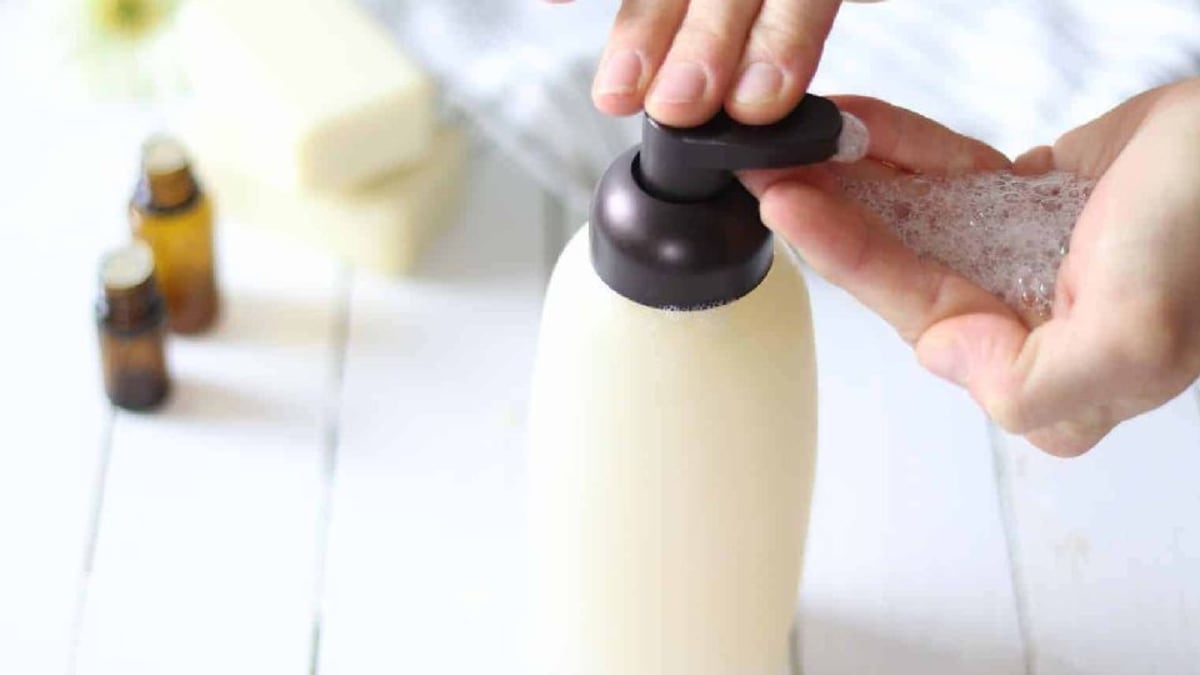
Reishi-infused shampoos are another option, though specialty shampoos with reishi extract only provide brief contact during washing. Exposure time is short, so do not expect dramatic results. Regular use adds up over time, and the anti-inflammatory benefits may help scalp condition with consistent application.
A dual approach works well for some people, combining topical application for direct follicle exposure with oral reishi for general adaptogenic benefits and systemic stress reduction. Oral supplements will not block DHT long enough to matter for hair specifically. Reducing systemic stress is a different story - that pathway may actually help with shedding that has a stress driver.
| Application Method | Potential Benefit | Limitations |
|---|---|---|
| Oral supplement | Stress/cortisol support only | 40-min half-life, not effective for hair DHT blocking |
| Scalp tincture | Direct follicle exposure, anti-inflammatory | Requires consistent application |
| Reishi shampoo | Convenient, some anti-inflammatory effect | Brief contact time |
| Oral + topical | Addresses multiple pathways | More complex routine |
We tried the DIY shampoo approach for about six weeks using Four Sigmatic reishi powder, steeping 2 tablespoons in 1 cup of hot water for 20 minutes, straining it, and mixing with castile soap and a tablespoon of argan oil. It worked fine. Results were modest. Anti-inflammatory effect was the main noticeable benefit rather than any dramatic regrowth.
Realistic expectations
Reishi is not going to regrow a bald head. No study has demonstrated that outcome, and the research available does not support that claim.
What reishi might do is support scalp health, reduce inflammation-related hair damage, help manage stress that contributes to shedding, and possibly slow follicle aging through the mechanisms identified in the 2024 iScience study.
For androgenetic alopecia specifically, the DHT-blocking mechanism exists but delivery problems through oral supplementation limit practical usefulness. Topical application shows more promise in animal studies. Human trials for reishi and hair specifically do not exist yet.
If you are experiencing hair loss, get a proper diagnosis first. Hormonal hair loss responds to different interventions than stress-related shedding or autoimmune conditions like alopecia areata. Reishi might help with some of these and have zero effect on others.
Our take is that reishi fits into a broader hair support strategy, not a one-supplement fix. Stack it with whatever evidence-based approach matches your specific type of loss. Standalone? You'll mostly see scalp condition improvements, and that is worth something, but it is not a restoration story.
Safety and side effects
Most people tolerate reishi fine. The safety record goes back centuries in traditional Chinese medicine, and modern toxicology work has not turned up anything alarming at standard doses - which for most supplements sits in the 1-3g daily range depending on extract concentration.
Potential side effects include dry mouth and digestive upset. Dizziness happens occasionally. These typically appear at higher doses or during the first week of use. Topical application has fewer systemic side effects than oral supplementation.
If you take blood thinners, use caution. Reishi has mild anticoagulant properties. The same applies if you have surgery scheduled or take immunosuppressant medications. Talk to your doctor before adding reishi to your routine if any of these apply to you.
Pregnant and breastfeeding women should avoid reishi due to limited safety data for these populations.
For hair-specific topical use, test a small area first to check for allergic reaction. Reishi allergy is uncommon but possible. If you notice redness, itching, or irritation at the application site, discontinue use.
Frequently Asked Questions

A dedicated wellness researcher who spent decades cataloging the impact of forest-based nutrition on human aging. Ashley doesn't care about trends; she cares about the data.
References & Further Reading
- Effects of Ganoderma Lucidum Extract and Microneedle Therapy on Hair Growth — Journal of Pediatrics of Korean Medicine (2015)
- Ganoderma lucidum attenuates CRH-induced cellular senescence in hair follicle cells — iScience (2024)
- An Update on Plant Derived Anti-Androgens — PMC (2012)
- Evaluation of Active Nutrients and Health Benefits of Reishi Mushroom — ResearchGate (2021)
- Antioxidant, antibacterial, and anti-inflammatory activity of Ganoderma lucidum — PMC (2022)