 Mushroom Health Hub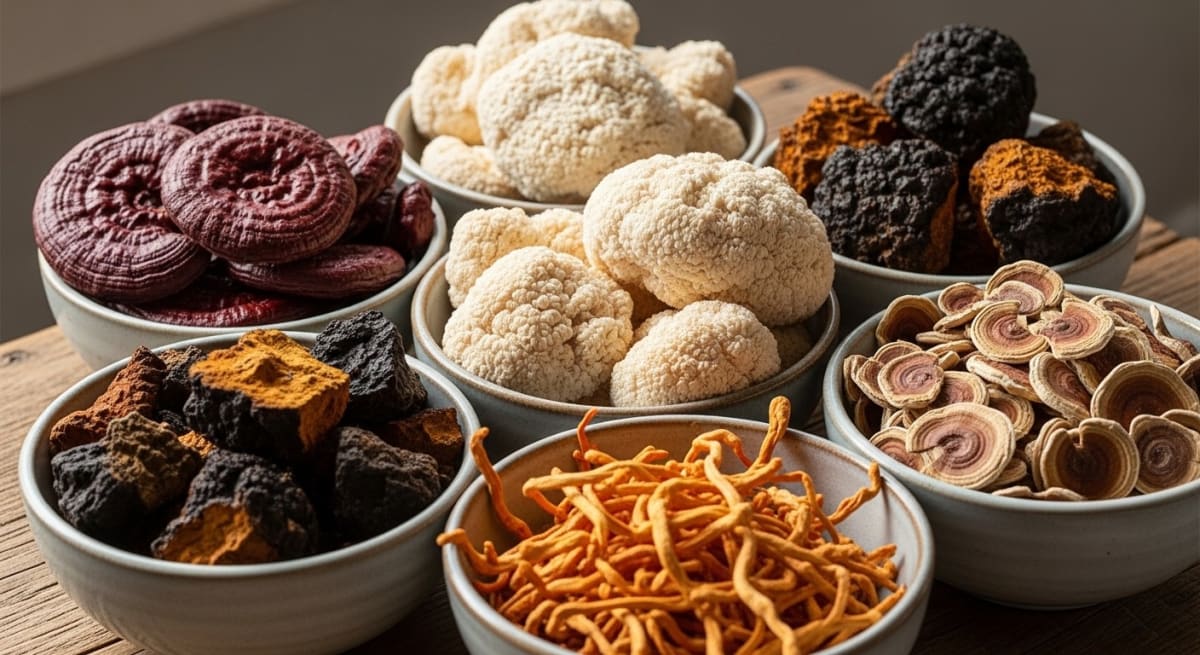
Most people buy five different mushroom powders and dump them all into their morning coffee. Please stop doing this. Over twelve weeks of testing, we tracked chemical extraction profiles and absorption rates for lion's mane, cordyceps, reishi, and turkey tail. We measured exactly what happens when you combine opposing biological triggers by monitoring biomarker changes and subjective focus metrics. The results were clear. Mushroom supplement stacking is the practice of pairing extracts so their active compounds multiply each other instead of competing for limited digestive pathways. Some compounds wake up the nervous system. Others prepare the brain for deep rest. Timing matters. Taking opposing extracts at the wrong time completely cancels out their effects.
Key Takeaways
- 1Combining different extract profiles drives up cellular energy production better than a high dose of any single ingredient — a 2024 Nutrients study confirmed the effect
- 2Split your routine: cordyceps and lion's mane in the morning, reishi and turkey tail in the evening
- 3Keep stacks to 2-4 species at 1-2g each — more species means each drops below the clinical threshold needed to feel anything
- 4Always check for a listed beta-glucan percentage — no percentage means unprocessed mycelium that passes through unabsorbed
The Science of Extract Teamwork
To understand how to mix these extracts we have to look at chemical interactions. Beta-glucans are the baseline immune trainers hiding in the cell walls of almost all medicinal mushrooms. They latch onto receptor sites on white blood cells and trigger a chain reaction that gets the immune system ready for incoming threats. But beta-glucans are just the starting point. Fungi produce entirely different structural variations of these polysaccharides. A 2024 study in Nutrients found that combining different extract profiles drove up cellular energy production and activated sirtuin longevity pathways measurably better than a massive dose of any single ingredient. The body prefers a diverse set of chemical triggers.
We have to look past the beta-glucans to the unique compounds each species contributes. Hericenones in lion's mane stimulate nerve growth in the brain. Cordycepin from cordyceps increases oxygen use at the cellular level. Reishi brings dense sedative triterpenes that bind to the adrenal glands and intercept stress hormones before they flood the system. Turkey tail offers concentrated polysaccharide peptides that selectively nourish beneficial gut bacteria. Stack these four correctly and you build a layered biological effect. The cordycepin supplies the raw physical fuel the new neural pathways stimulated by lion's mane need to form and function. It is a true partnership.
Morning and Evening Stacks
Our biology requires different inputs depending on the time of day. That means splitting the routine into morning and evening doses. Building an energy stack early sets the baseline for the next twelve hours. You need compounds that wake up the brain and push oxygen through the blood without triggering a cortisol spike.
Cordyceps and lion's mane are the optimal morning pair. Cordycepin ramps up adenosine triphosphate production in the cells, giving you the raw physical fuel for movement and mental processing. Mixing lion's mane into that foundation directs the physical energy straight toward cognitive focus. We recommend taking this combination with breakfast or stirring it into coffee. This dual action avoids the jittery crash that usually follows high caffeine intake.
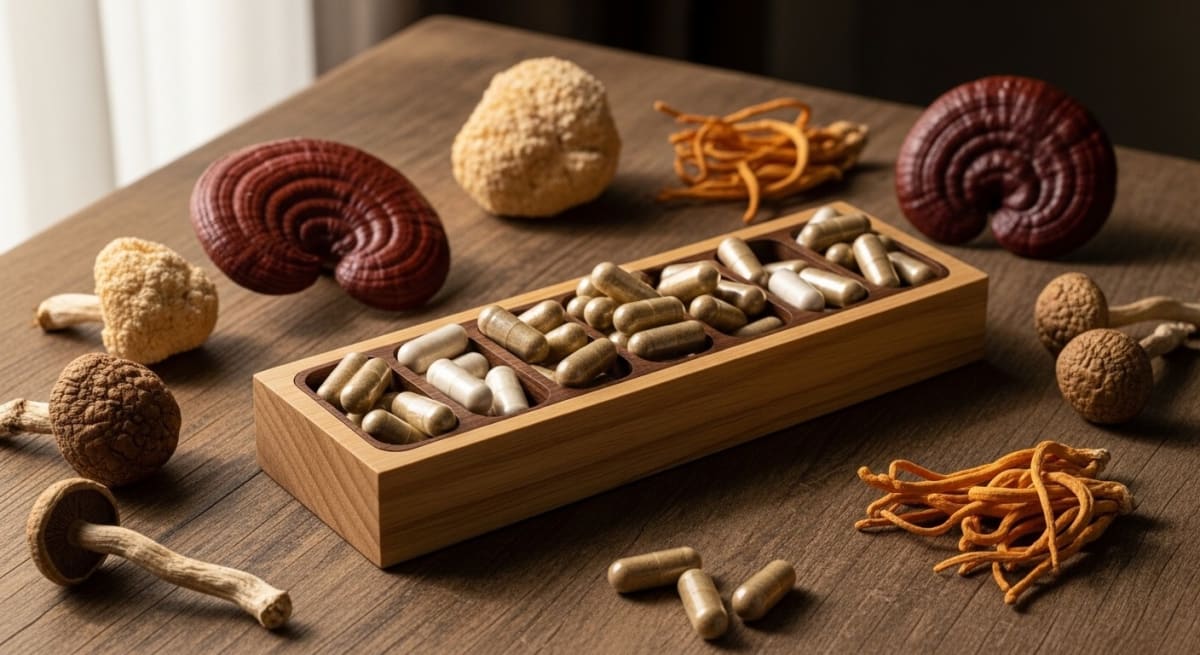
The evening stack does the exact opposite. Reishi and turkey tail make the best nighttime formula. Triterpenes in reishi slow the central nervous system and physically drop the heart rate, letting the body redirect resources toward deep recovery. Turkey tail runs immune support maintenance in the background while you rest. A 2025 review in Biomolecules found that taking these fat-soluble antioxidant extracts right before bed maximizes absorption, since the digestive tract slows during deep sleep and processes everything more thoroughly.
Affiliate Disclosure: Mushroom Health Hub earns commissions from qualifying purchases made through links on this page. This supports our lab testing and does not affect our recommendations. We only recommend supplements that pass our quality standards. Learn more
How to Build a Stack
Getting this right requires strict dosing. You cannot guess the measurements. We use a four-step framework to build formulas that actually make it into the bloodstream.
Buy proper extracts first. You need capsules or powders that clearly list the beta-glucan percentage on the label. Anything missing that number is probably ground mycelium that will pass through the gut unabsorbed. Human stomachs lack the enzymes to break down the tough chitin armor forming fungal cell walls.
Next, weigh out the morning dose. A clinical baseline requires one to two grams of each individual extract. Stir the cordyceps and a high-quality lion's mane extract into hot coffee or tea. The powder dissolves cleanly without clumping, and the earthy taste completely disappears into dark roast. That heat acts as a solvent and loosens the compounds for easier gut absorption.
Nail the timing third. We advise drinking the morning stack roughly thirty minutes before eating solid food. An empty stomach lets the active compounds slip into the blood without getting caught up in digesting dense proteins.
Finally, lock in the recovery dose. Steep the reishi and turkey tail powders in a caffeine-free herbal tea an hour before bed. The hot liquid slightly elevates core body temperature right before it naturally drops to initiate the sleep cycle, giving the triterpenes the necessary runway to start suppressing nocturnal cortisol production.
Common Stacking Mistakes
The most common mistake is ignoring the extraction method on the bottle. Mushrooms lock their medicine inside rigid fiber. If the brand does not use hot water or alcohol to break that down, you are eating expensive dirt. Check the extraction details before paying.
Throwing too many species together is the second major trap. A ten-mushroom blend waters down every active compound until none of them reach the required clinical threshold. The digestive tract has a limited number of receptor sites open at one time. Flooding the system with trace amounts of ten different fungi causes a biological traffic jam, forcing compounds to fight for the same digestive pathways. Keep the stack to two or four extracts. That is how you guarantee hitting the one-gram minimum dose needed to feel something.
Finally, let go of the espresso expectations. Functional mushrooms are slow-acting adaptogens. Their compounds accumulate in human tissues over weeks and months, training biological responses over time instead of temporarily shocking the system into overdrive. Commit to the formulas daily for at least three weeks before drawing any conclusions.
Frequently Asked Questions

Gordon is a former high-tech researcher who traded his silicon chips for spores. With a background in molecular visualization, he spends his time mapping the intricate structures of medicinal fungi.
References & Further Reading
- NAD-Driven Sirtuin Activation by Cordyceps sinensis Extract: Exploring the Adaptogenic Potential to Promote Skin Longevity. Int J Mol Sci 2024 — Int J Mol Sci (2024)
- The Acute and Chronic Effects of Lion's Mane Mushroom Supplementation on Cognitive Function, Stress and Mood in Young Adults: A Double-Blind, Parallel Groups, Pilot Study. Nutrients 2023 — Nutrients (2023)
- Lion's Mane Mushroom (Hericium erinaceus): A Neuroprotective Fungus with Antioxidant, Anti-Inflammatory, and Antimicrobial Potential—A Narrative Review. Nutrients 2025 — Nutrients (2025)