 Mushroom Health Hub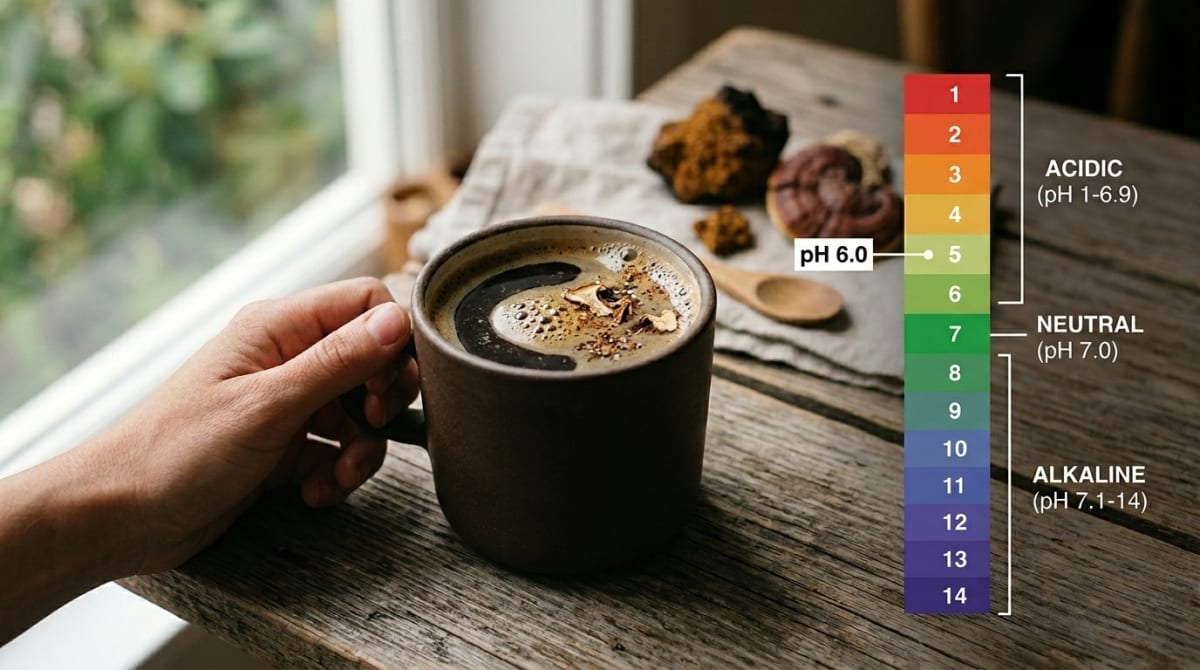
Black coffee smacks the gut with a pH of 4.8. It is basically hot tomato juice. The math flips entirely when we add fungi. We tested the chemical profiles of functional blends against standard roasts to see if they actually neutralize stomach burn. The difference is measurable. When you mix mineral-dense mushrooms into a dark roast the brewing chemistry shifts, buffering the corrosive acids that normally strip the delicate stomach lining and trigger painful afternoon acid reflux.
Is mushroom coffee acidic? It still carries a mild bite. But a quality blend sits between 5.5 and 6.5 on the pH scale. This makes it far gentler on a reactive stomach than a regular cup.
Millions of adults rely on morning caffeine to function. They spend the rest of the afternoon chewing antacids. We accepted this miserable trade-off for decades because decaf still caused heartburn and tea lacked the necessary punch. Functional mushrooms break the cycle. They intervene at the chemical level to change how the beverage interacts with the body. Clinical data shows even a single point shift on the pH scale cuts the total acid load by ninety percent.
Key Takeaways
- 1Mushroom coffee sits between pH 5.5 and 6.5, far gentler on the gut than regular black coffee at pH 4.8
- 2Chaga's potassium and magnesium minerals bind directly to coffee acids before they reach the lower esophageal sphincter
- 3Reishi polysaccharides reduce histamine release in the stomach wall, cutting the body's acid overreaction to caffeine
- 4Cold brewing cuts acidity by a further 70%. Paired with a dark roast mushroom blend, it is the safest option for reactive stomachs
How the Acidity Drops
Look at the pH scale to understand why regular coffee hurts. Zero to fourteen. Seven is dead neutral. Standard roasts hover around 5.0. Mushroom blends push that number closer to 6.0.
This shift happens because of sheer mineral density. Chaga mushrooms grow on birch trees in subzero climates. They pull massive amounts of potassium and magnesium from the host wood. Wild Chaga draws its nutrients from the inner bark over the course of five to ten years, an incredibly slow growth cycle that packs the fungus with a heavy concentration of earth metals. When hot water hits the ground powder these minerals dissolve instantly. They seek out the chlorogenic acids in the liquid and bind to them. This stops the harsh compounds from aggravating the lower esophageal sphincter.
Reishi tackles the problem from a biological angle instead of a chemical one. It changes how the stomach reacts to the brew. While Chaga acts as a mineral sponge in the cup, Reishi functions as a biological modulator in the body. A 2022 study in Nutrients tracked ethanol-induced gastric injury in rats. Researchers found that polysaccharides from Reishi lowered histamine release in the stomach wall. Histamine is the exact chemical messenger telling the body to pump out digestive acid. Reishi calms this histamine response and prevents the stomach from overreacting to the caffeine. Beta-glucans physically coat the stomach lining to provide a structural shield against incoming irritants.
Gut Health Benefits for Acid Reflux and GERD
People with gastroesophageal reflux disease know the misery of a morning pour. The acidity burns the esophagus. The caffeine relaxes the valve at the top of the stomach. Regular coffee delivers a brutal double strike to the digestive system.
Mushroom coffee softens the blow considerably. A jump from a pH of 5.0 to 6.0 sounds minor on paper but the scale is logarithmic. A beverage at 5.0 is ten times more acidic than one at 6.0. Switching the morning drink cuts the total acid load by a massive margin. This reduction halts the daily erosion of the digestive tract.
The immediate upside is a lack of burning in the chest. The long-term upside involves support for cellular recovery. Continuous exposure to high-acid coffee damages the microscopic villi lining the intestines. A low-acid alternative gives the gut a break from chronic irritation. The beta-glucans in the extracts act as prebiotics. They feed the good bacteria residing in the lower gut. Over time this shifts the entire microbial balance of the digestive system. When the gut microbiome achieves balance the body naturally downregulates systemic inflammation, which makes the stomach far less reactive to the occasional dietary indiscretion. For more on how Chaga specifically fights systemic inflammation, see our guide on Chaga mushroom for inflammation.
Fungi build their cell walls from chitin, the exact same tough material forming crab shells. Human stomachs cannot break this down naturally. If a supplement company simply grinds up raw mushrooms and mixes them with coffee beans the resulting product provides zero digestive benefits. The body treats the raw powder as useless dietary fiber, causing more gas and bloating for someone with a delicate digestive tract. Hot water extraction melts the chitin away. It isolates the alkaline compounds and the soothing beta-glucans into a bioavailable powder that dissolves effortlessly into the morning brew. Always verify the extraction method before purchasing. Brands skipping this step are essentially selling expensive sawdust that passes through the digestive tract completely unabsorbed.

How to Brew for a Sensitive Stomach
We can modify brewing habits to drop the acid levels even further. Light roasts retain the highest amount of native fruit acids from the coffee cherry. Dark roasts burn these compounds away during the roasting process. A dark roast mushroom blend is the safest bet for protecting the gut.
Cold brewing cuts acidity by another seventy percent. Simply mix the grounds with cold water and let it sit in the fridge for sixteen hours. The cold water extracts the flavor and caffeine without pulling out the harsh bitter compounds.
If you prefer a hot mug, brew it with alkaline water. The extra minerals in the water will neutralize the remaining acidity in the beans. Two cups a day is the ideal target for digestive support. Drinking more than two daily risks overwhelming the stomach with caffeine, which will negate all the buffering benefits provided by the alkaline mushrooms.
Dairy milk might seem like a smart way to neutralize acid but it often backfires. Dairy is slightly acidic and can trigger lactose-related bloating. Plant-based milks like oat or almond are naturally alkaline and pair well with mushroom coffee. They add creaminess while pushing the pH even closer to a neutral seven. For guidance on the best time of day to drink your blend, our article on when to drink mushroom coffee covers that in detail.
Limitations and Side Effects
Mushroom coffee is not a cure for severe ulcers. It still contains caffeine. Caffeine naturally stimulates bowel movements and can trigger mild acid production regardless of how high the pH climbs.
If you have an active ulcer, do not drink any coffee on an empty stomach. Drink the mushroom blend after eating breakfast. The food gives the acids something to break down besides stomach tissue.
Do not ignore chronic stomach pain just because a mushroom blend makes the morning tolerable. Persistent reflux requires medical evaluation. Decaffeinated mushroom coffee is the best option for extremely sensitive digestive systems. Give the gut at least one full month to adapt to the new compounds before deciding if the functional mushrooms are actually managing morning heartburn.
Frequently Asked Questions

A master of synergy who views health through the lens of balance. David has spent half a century studying how fungi interact with the human nervous system.