 Mushroom Health Hub
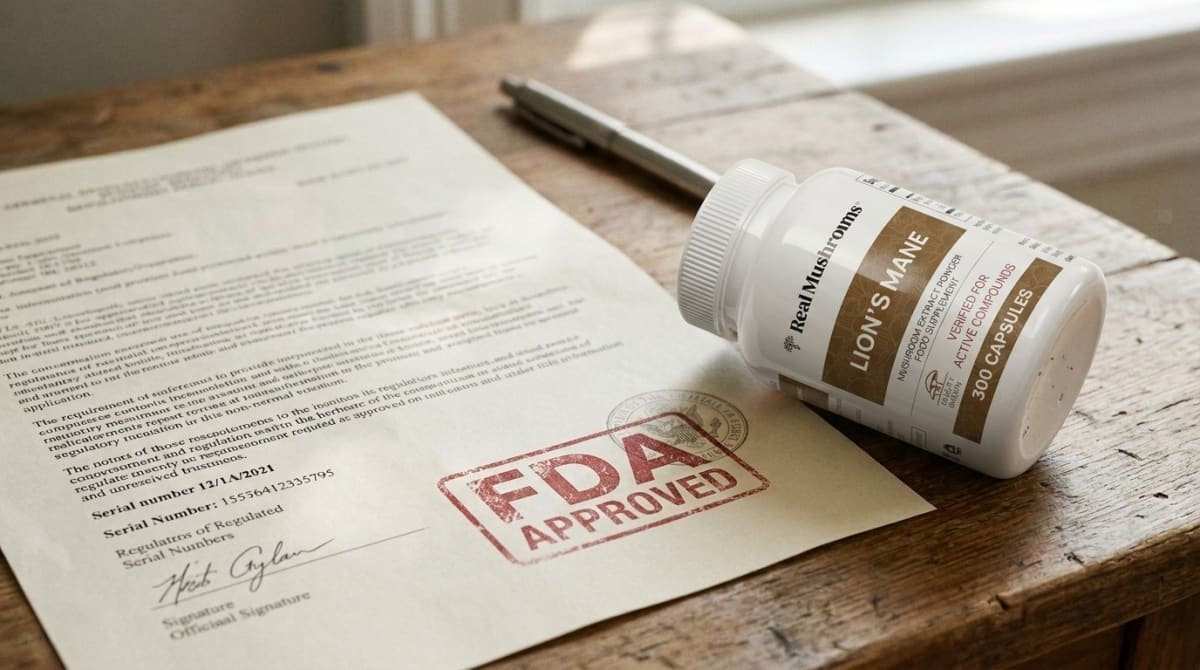
"GRAS certified" sounds official. Like some federal agency stamped a seal of approval on a batch of mushroom extract and cleared it for human consumption. That isn't what happens at all.
The FDA doesn't actually certify anything as GRAS. They don't issue certificates or verify manufacturing processes and they certainly don't confirm most of the claims we see printed on supplement bottles. A March 2026 investigation by the Environmental Working Group found mushroom extracts in 428 consumer products that were never reported to the FDA for a safety review. Not one. Companies simply declared their own ingredients safe and shipped them to stores. The law currently allows this.
If people take lion's mane for focus or cordyceps for energy the GRAS label tells them practically nothing about whether an independent party reviewed the safety data or just took the manufacturer's word for it. We looked into what the term actually means under US law and what is changing in 2026.
Key Takeaways
- 1GRAS is a self-declared legal exemption. Companies can make the determination using a private expert panel with no FDA review required.
- 2Two pathways exist. Self-affirmed means no public record. FDA-notified means the company submitted a GRAS notice and received a GRN number.
- 3A 2026 EWG investigation found mushroom extracts in 428 products that were never reported to the FDA for a safety review.
- 4Look for a GRN number on supplement labels. No GRN means the GRAS claim was self-determined and the safety data is not publicly available.
What GRAS Actually Means Under US Law
We need to understand the origins of the phrase. GRAS stands for Generally Recognized as Safe. Congress created an exemption back in 1958 for the Food Additives Amendment to the Federal Food, Drug, and Cosmetic Act. The idea was to bypass premarket approval for substances that were already widely consumed and obviously safe like salt, vinegar, baking soda, and flour. Centuries of use made their safety obvious.
The legal definition offers two paths. A substance can achieve status through common use in food before 1958 or through scientific procedures that demonstrate safety. For modern mushroom extracts we only care about the second path. Lion's mane was not exactly a staple of the 1950s American diet. Neither was cordyceps.
Here is the catch. The law says qualified experts determine GRAS status. It doesn't stipulate those experts have to work for the FDA nor does it require the agency to review their conclusion. The rules don't even mandate that a company admit to the FDA it made a determination in the first place.
A substance that is GRAS under its intended uses sidesteps the food additive approval process completely. That means no premarket review and zero FDA sign-off. The brand bears the legal responsibility for the safety conclusion and the government only gets involved if something goes wrong later on down the line.
For a product sold as a dietary supplement rather than a conventional food the regulatory picture gets incredibly murky. Dietary supplements bypass FDA pre-approval by design. Regulators can act after a product enters the market if it is adulterated or misbranded but there is no gatekeeper standing at the front door to prevent unsafe capsules from reaching consumers in the first place.
So when a mushroom brand says its lion's mane extract is GRAS they are basically saying a private panel of scientists they hired reviewed their data and agreed it is safe. That is the entire extent of the claim.
The Two GRAS Pathways
Let's look at how companies go about establishing this status. They have two distinct routes. How they differ is perhaps the single most important thing to grasp when evaluating a mushroom supplement.
The self-affirmed GRAS pathway means a brand assembles a safety dossier, convenes a private panel of experts, and reaches its own conclusion without submitting a single document to the FDA. The paperwork can include toxicology studies and literature reviews. Or it can include as little as the company decides is sufficient to clear the bar. The FDA and the public never lay eyes on the dossier. The conclusion stays firmly outside the agency's official notice inventory.
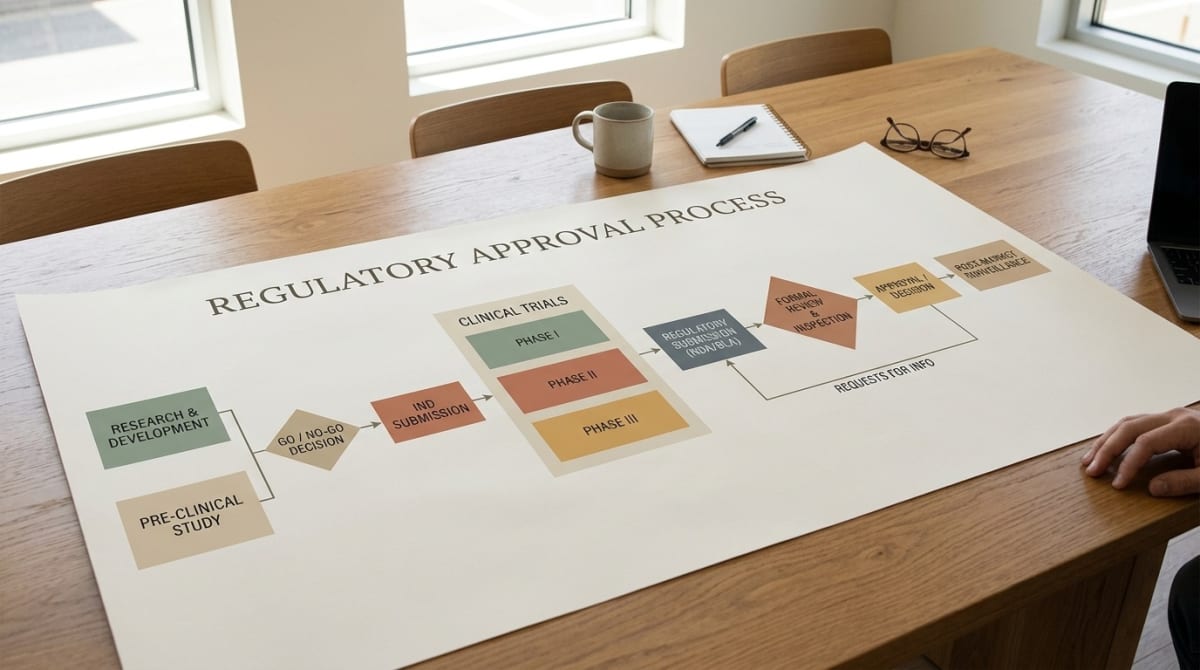
Then we have the FDA-notified GRAS pathway. This is when a company voluntarily hands a GRAS notice over to the FDA. The agency reviews the identity, manufacturing process, intended use, and safety evidence. If they find no concerns they issue a 'no questions' letter stating that regulators reviewed the notice and did not object at that time. That letter is not an approval. The FDA can still take action later if new evidence emerges but at least the notice and the agency's response become part of a public record.
The Morgan Lewis law firm described self-affirmations as the most likely to be targeted by FDA since they provide regulators with absolutely no notification or safety data about the food ingredient.
This difference matters deeply for mushroom extracts. We are talking about ingredients that are heavily concentrated or chemically altered during production. A dried lion's mane mushroom and a 10:1 hot water extract are totally different substances from a regulatory perspective. The FDA evaluates defined substances produced under highly specific conditions rather than granting blanket status to an entire fungal species.
One company can legally sell lion's mane powder as a food ingredient based on a private dossier while a competitor sells a concentrated extract of the exact same mushroom species with a wildly different safety profile. The identical GRAS label ends up printed on both bottles.
Why This Matters for Lion's Mane and Cordyceps
Money is pouring into this space. The functional mushroom market is projected to exceed $34 billion. Lion's mane and cordyceps are two of the fastest-growing ingredients in that massive market. Both present regulatory challenges that make the GRAS distinction legally material rather than just an academic debate.
Commercial cordyceps capsules usually contain the cultivated militaris strain which is much easier to grow than wild Cordyceps sinensis. Militaris is richer in cordycepin. That is the compound researchers study for energy and immune effects. A 2026 systematic review of human trials found that Cordyceps militaris was generally well tolerated with infrequent adverse events. In the single study with extractable comparative counts the risk ratio for any treatment-emergent adverse event was 1.40 with a confidence interval spanning 0.44 to 4.45. That wide range crosses one meaning the result is statistically uncertain. The review found no consistent signal of serious adverse events, hepatotoxicity, or haematological toxicity but the certainty of evidence was rated low to very low because of limited sample sizes and short durations.
We see this as a data gap rather than a glaring safety red flag. Short-term cordyceps use looks safe in existing studies but long-term safety at the high doses used in concentrated extracts remains unestablished. If you are unsure about your total intake, see our guide on how much is too much.
Lion's mane faces a quite similar situation. A 2025 systematic review in Frontiers in Nutrition examined five randomized controlled trials, three pilot clinical trials, and 15 laboratory studies on Hericium erinaceus. Potential side effects include stomach discomfort and headaches. Oral doses up to one gram daily for 16 weeks appear safe in the underpowered studies conducted so far.
Neither mushroom has a history of common use in the US food supply before 1958 and neither has been evaluated by the FDA through a notified GRAS process for the extract forms sold in supplements. The GRAS claims on the labels rest solely on private self-affirmed dossiers.
The EWG Investigation and the 2026 GRAS Reform
Things started shifting recently. The Environmental Working Group's March 2026 investigation finally pulled back the curtain on how widespread self-affirmed GRAS has become. Their report identified 111 food substances that companies declared safe without ever notifying the FDA. Mushroom extracts appeared in 428 products including coffee, energy drinks, protein shakes, granola bars, seasoning, cheese, and frozen dinners.
The EWG analysis found that companies can hire a private panel of scientists, have that panel declare an ingredient GRAS based on proprietary data, and dump the ingredient into products without telling the FDA or the public a thing. The report's authors called it a massive loophole that keeps the government and the public entirely in the dark.
The Alliance for Natural Health offered a pointed response. Their counter-analysis noted that the EWG list includes green tea extract and coenzyme Q10 which are substances that have been consumed for decades and studied extensively. Labelling them secret chemicals ignores the massive gulf between an industrial solvent and a concentrated botanical extract.
The self-affirmed pathway does allow companies to bypass public disclosure. It also allows emerging brands to bring new mushroom products to market without dropping hundreds of thousands of dollars on a full FDA notification process. That inherent regulatory tension is now sitting squarely before the FDA.
On August 10, 2026 the agency published a proposed rule making GRAS notification mandatory. If finalized companies would have to notify the FDA before marketing a self-determined GRAS substance in human or animal food though a streamlined submission option requiring only basic information would apply to substances already in interstate commerce. Comments on the proposed rule are due by December 9, 2026.
The proposal would not create a strict premarket approval requirement. Companies could still market GRAS substances before and while the FDA reviews the notification. But the agency would finally gain visibility into what is being sold and could prioritize post-market review based on that information.
Industry response has been decidedly mixed. Loren Israelsen of the United Natural Products Alliance said the proposed rule takes 140 pages to say that not much changes if companies already have well-documented GRAS dossiers. Industry groups have repeatedly raised concerns about whether the FDA has the budget and staffing to review hundreds or thousands of additional submissions anyway.
What to Look for on a Mushroom Supplement Label
We are mostly on our own for now. Consumers need to evaluate labels themselves until these rules finalize. A few practical checks cut through the noise.
We recommend checking for an FDA GRAS Notice number. If a company went through the notified pathway it will have a GRN number. The FDA maintains a public inventory of GRAS notices online. A self-affirmed GRAS claim will lack a GRN entirely. It might mention an expert panel or a thick safety dossier but there is no public record to actually verify.
Buyers should also look closely for third-party testing. GRAS status does not address product quality whatsoever. A product can be GRAS for its intended use and still contain heavy metals, be entirely misidentified, or fall short of its own label claims. Independent marks from NSF or ConsumerLab show that someone physically tested the batch for identity and contaminants.
It helps to understand what GRAS actually represents in practice. It is not FDA approval or a certification. The label does not guarantee the product works or is safe for everyone. It is just a legal determination about whether a substance can be added to food without navigating the grueling food additive petition process which takes years and costs a small fortune to complete. For lion's mane and cordyceps supplements that determination was almost certainly made behind closed doors by the company selling the product.
The most transparent brands tell buyers exactly which GRAS pathway they used. They provide a GRN number and publish third-party test results for anyone to read. Silence is a warning sign. If a brand claims GRAS but cannot explain the term beyond a graphic checkmark on a label the internal safety review was likely dangerously thin. Most of the products we analyzed fell into this exact category.
Frequently Asked Questions

A dedicated wellness researcher who spent decades cataloging the impact of forest-based nutrition on human aging. Ashley doesn't care about trends; she cares about the data.
References & Further Reading
- Clinical safety and tolerability of Cordyceps militaris in humans - A systematic review of adverse events with exploratory quantitative synthesis. J Funct Foods 2026 — J Funct Foods (2026)
- Secret GRAS - How 100+ food chemicals bypassed government safety review. Environmental Working Group 2026 — EWG (2026)