 Mushroom Health Hub
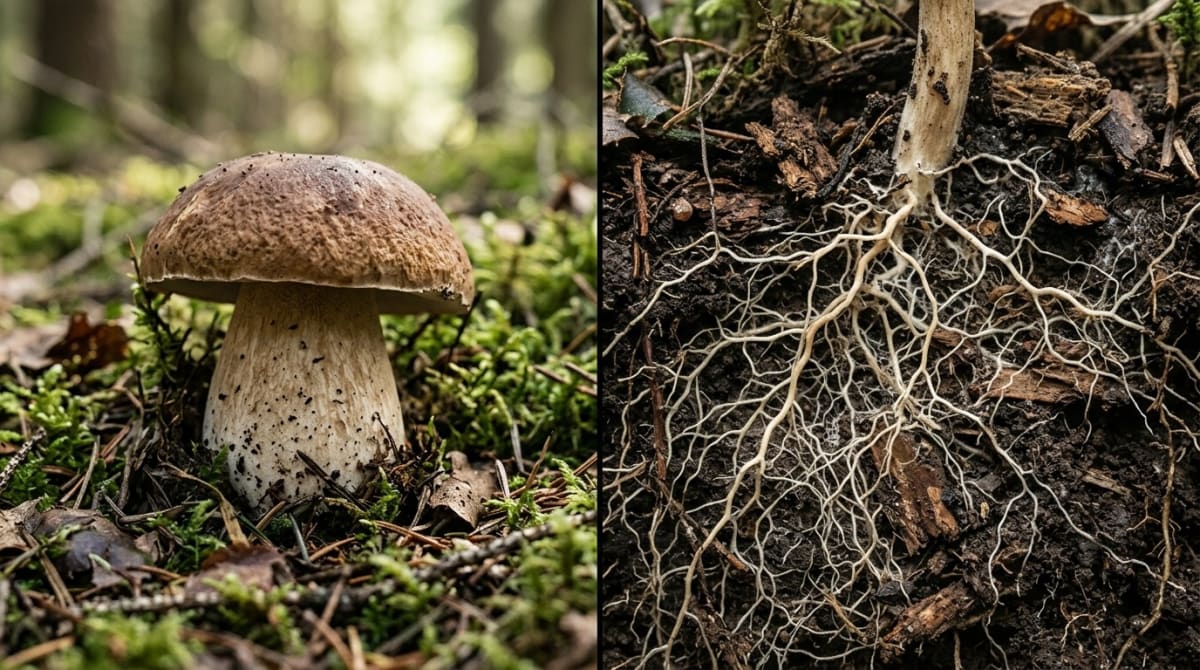
Most people assume every lion's mane supplement holds the same active ingredients. It doesn't. Hericenones and erinacines are two different families of molecules, and they come from different parts of the fungus. Hericenones are found in the fruiting body, the part you can see. Erinacines are found in the mycelium, the hidden network underneath.
That split matters when you read a label or a study. The extract on the shelf decides which compounds you actually get, and the research behind each one is not equal.
Key Takeaways
- 1Hericenones are meroterpenoids found in the lion's mane fruiting body, while erinacines are cyathane diterpenoids found mainly in the mycelium.
- 2A 2025 systematic review of preclinical models linked erinacines to antioxidant, anti-inflammatory, and neurotrophic effects in cells and rodents.
- 3Human evidence for either compound family is limited, and reviewers call for larger clinical trials.
- 4The label should tell you which part of the fungus was used, so check for third-party testing that names the compounds.
The chemical difference
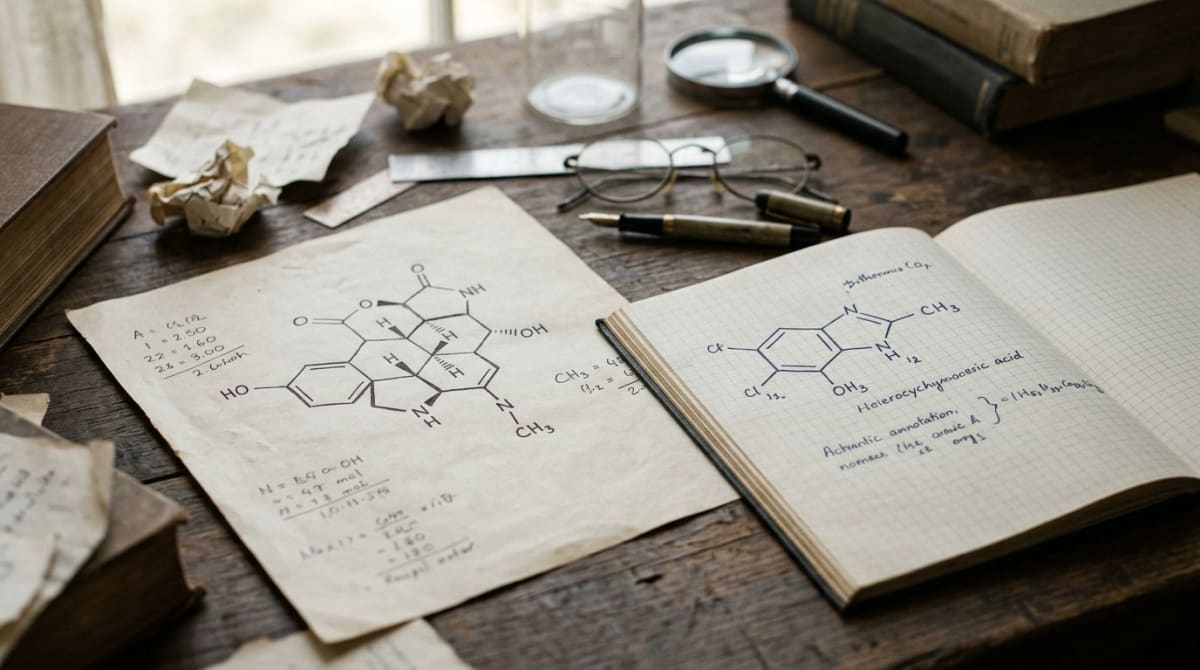
The two groups belong to different chemical families. Hericenones are meroterpenoids, which means they mix a terpene piece with a non-terpene piece. Erinacines are cyathane diterpenoids, a more compact ring-based structure built from four isoprene units.
We find it helps to think of them as cousins, not twins. Both have drawn scientific interest because lab work links them to nerve growth factor, a protein that supports neuron health. Their structures differ, though, so researchers do not expect them to behave the same way in the body.
Where each compound lives
Fungi keep their chemistry in different places. The fruiting body is the cap and spines you would buy fresh or dried. The mycelium is the feeding network that grows through wood or, in commercial settings, through grain or liquid broth.
Hericenones come from the fruiting body. A plain lion's mane powder made from the mushroom itself is a fruiting body product. Erinacines come mainly from the mycelium, which is why products that list them are usually made from cultured mycelium. Cooking fresh mushroom will not give you erinacines, and a mycelium-only product is not the right pick if hericenones are what you want.
What the research has tested
The erinacine side has the deeper mechanism work. A 2025 systematic review in Frontiers in Pharmacology pulled together cell and rodent studies on erinacines. The authors reported dose-dependent effects on motor, cognitive, and depression-like behaviors in animals. They also found antioxidant and anti-inflammatory activity, with erinacines A and C standing out for raising the antioxidant regulator Nrf2.
Those are animal and cell results. The authors describe them as promising, and they do not show the same outcome in people.
Human work is thinner. A 2023 review in the Journal of Fungi noted that many of the pathways were mapped in preclinical models and that only a limited number of clinical trials exist. Its authors called for larger studies to test safety and efficacy.
One small trial is worth a mention. A 2023 pilot study in Nutrients gave 1.8 g of lion's mane to 41 healthy adults aged 18 to 45. An hour after a single dose, the group taking lion's mane was quicker on the Stroop task. After 28 days, subjective stress showed a trend toward lower scores, but it just missed the usual cutoff for significance. The authors urged caution because the sample was small and several other measures showed no change. They did not set out to compare hericenones against erinacines, so the study cannot tell us which compound did what.
How we read a label
When we go through lion's mane labels, the first thing we check is what the product says about its source. A label that names the fruiting body, the mycelium, or both tells you more than a vague "lion's mane extract."
Then look for lab testing. Third-party results that name hericenones or erinacines, with amounts, are far more useful than a marketing line about brain health. If a brand lists no compounds at all, you are guessing.
Finally, keep expectations realistic. The science here is early. If you take medication or have a neurological condition, talk to your doctor before adding a supplement.
Frequently Asked Questions

Gordon is a former high-tech researcher who traded his silicon chips for spores. With a background in molecular visualization, he spends his time mapping the intricate structures of medicinal fungi.
References & Further Reading
- Unveiling the role of erinacines in the neuroprotective effects of Hericium erinaceus: a systematic review in preclinical models. Front Pharmacol 2025 — Front Pharmacol (2025)
- Hericium erinaceus in Neurodegenerative Diseases: From Bench to Bedside and Beyond, How Far from the Shoreline? J Fungi 2023 — J Fungi (2023)
- The acute and chronic effects of lion's mane mushroom supplementation on cognitive function, stress and mood in young adults: a double-blind, parallel groups, pilot study. Nutrients 2023 — Nutrients (2023)