 Mushroom Health Hub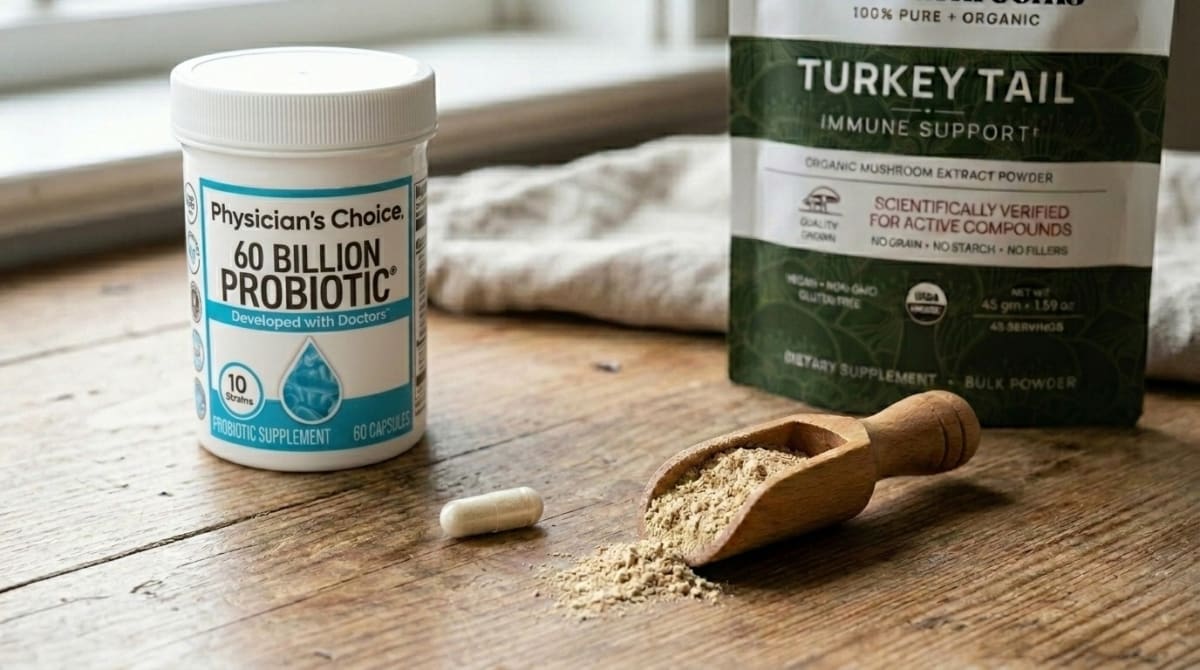
Taking live probiotics without feeding them is basically planting seeds on bare concrete. You swallow expensive capsules and just hope the bacteria survive the trip. We tracked microbiome data and clinical trial outcomes to figure out how dietary fungi actually alter the gut environment, and the data points to a huge missed opportunity. Fungi like turkey tail and shiitake pack heavy doses of beta-glucans. These complex carbs survive stomach acid. They arrive in the lower intestine and serve as a high-end food source for the imported live bacteria you're trying to grow. Most people skip this prebiotic step entirely and just swallow billions of colony-forming units every morning only to watch those imported strains starve out before they can establish a permanent foothold.
Key Takeaways
- 1Turkey tail beta-glucans survive stomach acid intact and feed Bifidobacterium and Lactobacillus in the lower gut where probiotics need to colonize
- 2Fermenting mushroom fiber produces butyrate, which seals tight junctions in the colon wall and blocks pathogens from entering the bloodstream
- 3Take probiotics first on an empty stomach, then follow with 1 gram of turkey tail extract 10 minutes later to maximize bacterial survival rates
- 4Mild bloating in week one is a positive sign confirming beta-glucans reached the lower intestine and bacteria are actively fermenting them
Why probiotics die (and how mushrooms save them)
Raw fungi lock their best compounds behind walls of chitin. That happens to be the very same rigid material forming crab shells. Since human stomachs lack the enzymes to digest raw chitin, a hot water extraction is non-negotiable to pull out those trapped medicinal compounds. Once extracted, the freed beta-glucans slide right past the acidic stomach environment.
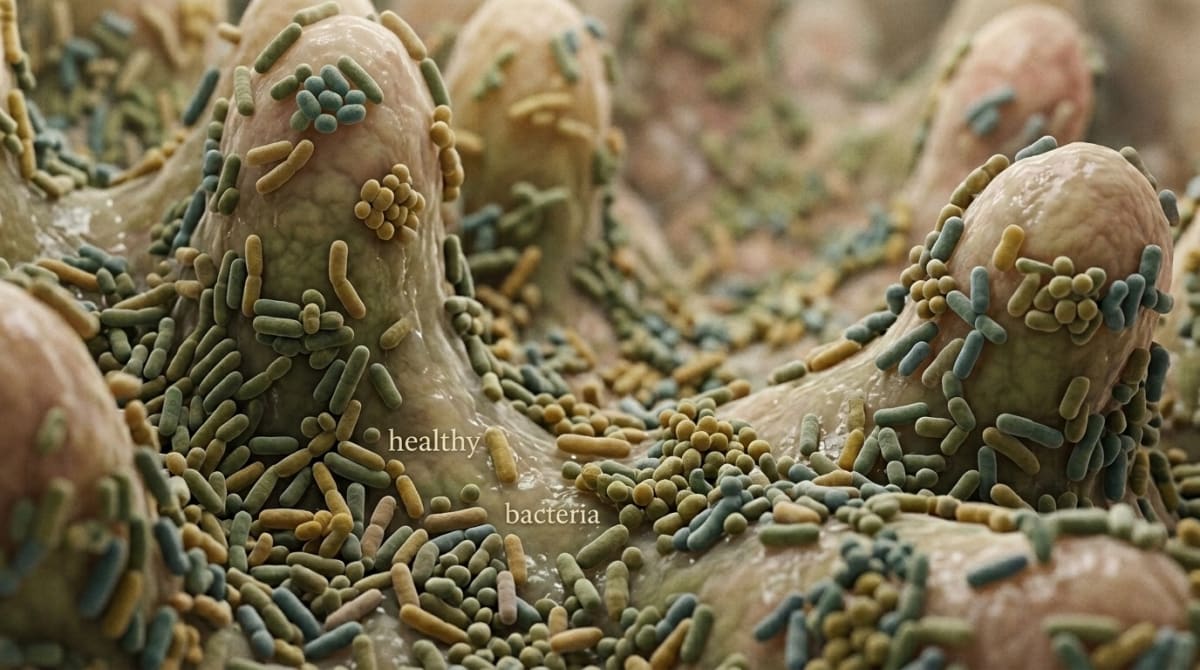
Down in the large intestine they finally meet the locals. Bacteria like Bifidobacterium and Lactobacillus treat mushroom polysaccharides like an absolute feast. They latch onto the beta-glucans and ferment them. This process produces short-chain fatty acids. Butyrate is the heavy hitter here. It acts as the primary fuel for the cells lining your colon, and this organic compound physically tightens the structural junctions between tissue walls to block intestinal permeability while cooling off local swelling.
We looked at survival rates of ingested bacteria and adding fungal prebiotics completely changes the math. The probiotics land in the lower tract with immediate access to fuel. They multiply fast. A daily dose of turkey tail or shiitake extract engineers a fiercely competitive environment where good strains easily starve out harmful pathogens for territory and resources. The relationship works both ways. The bacteria need the mushroom fiber to survive. The body scoops up the resulting butyrate to rebuild damaged tissue.
The clinical evidence for turkey tail and shiitake
You don't have to guess about the biology here. Clinical data maps the exact routes these fungi take through the gut. A 2024 study in Microorganisms tracked intestinal flora in high-fat diet mice, discovering that Trametes versicolor polysaccharides successfully reversed the microbial damage. The turkey tail knocked down populations of bile-salt-hydrolase-producing bacteria. It spiked the growth of butyrate-producing strains. The data highlighted two specific metabolic routes called the buk and but pathways. Turkey tail activated these channels to force the bacteria to pump out more butyrate. Higher butyrate means a thicker mucosal lining. A dense lining locks pathogens out of the bloodstream.
Shiitake kicks off a similar chain reaction. A 2023 review in Biology looked at how Lentinula edodes reshapes the physical layout of the gut. The mushroom polysaccharides drove up acetic acid and propionic acid production while completely reversing age-related microbial decline. The ratio of Firmicutes to Bacteroidetes plummeted. That ratio is a major indicator of metabolic health. Lentinula edodes gave probiotic populations enough raw material to boost defensive immune cell counts, since the bacteria fermented the fiber and immediately signaled the immune system to quiet down inflammation.
These fungi act like ecological engineers. They restructure the neighborhood. They invite the good strains to sign a long-term lease. When someone swallows a standard probiotic capsule they are dumping vulnerable bacterial cells into a hostile acid bath that offers zero nutritional support. Adding the extract supplies the carbohydrate fuel required to colonize the territory.
The protocol for taking probiotics and mushrooms together
We designed our protocol to guarantee maximum survival rates for the imported bacteria. Timing is everything. Probiotics always perform best on an empty stomach because the lack of digesting food means stomach acid sits at rock bottom and the capsules can sprint through unharmed. Take the probiotic first thing in the morning with a tall glass of water. Wait ten minutes. Drink the mushroom extract next.
Affiliate Disclosure: Mushroom Health Hub earns commissions from qualifying purchases made through links on this page. This supports our lab testing and does not affect our recommendations. We only recommend supplements that pass our quality standards. Learn more
We stir Real Mushrooms Turkey Tail Extract right into hot water or dark roast coffee. Heat won't damage beta-glucans. It just dissolves the powder so the body can absorb it faster.
Dose dictates the prebiotic effect. Start at one gram of turkey tail per day. That delivers enough polysaccharide weight to feed the incoming strains without shocking your system. Bump it to two grams a day after week two. This slow ramp-up lets the intestinal environment adapt to the sudden influx of complex carbs without triggering unnecessary discomfort or weird digestive shifts that might derail the whole colonization process.
If you want shiitake in the mix you can use a blended powder or just cook whole shiitake caps with dinner. Eating culinary mushrooms at night hands the bacterial colonies a slow-digesting fiber source they can work on while you sleep. The morning extract kickstarts the growth. The evening meal sustains it. Hydration is absolutely non-negotiable here since the beta-glucans soak up liquid as they move downward through the digestive tract, turning into a protective gel that coats the intestinal walls and supports mucosal repair. Drink sixteen ounces with the morning stack.
Side effects and what to expect
Waking up a starved microbiome causes some temporary turbulence. When dormant colonies suddenly get hit with a massive influx of fungal fiber they get straight to work. Rapid fermentation creates gas. You will probably experience some mild bloating and flatulence during week one. This is actually a great sign. It proves the beta-glucans made it to the lower intestine intact and the bacteria are busy converting them into short-chain fatty acids that will eventually reduce inflammation across the digestive tract. Bloating usually peaks on day three. It tapers off by week two.
If the gas actually hurts just cut the mushroom dose in half. Keep taking the probiotics. A slower drip of prebiotics buys the digestive tract time to handle the extra gas production without forcing you to quit the protocol entirely. Anyone dealing with a history of severe bacterial overgrowth should check with a doctor before trying this stack. The fibers feed everything in their path. They will aggressively nourish an existing overgrowth right alongside a healthy colony.
Frequently Asked Questions

A dedicated wellness researcher who spent decades cataloging the impact of forest-based nutrition on human aging. Ashley doesn't care about trends; she cares about the data.