 Mushroom Health Hub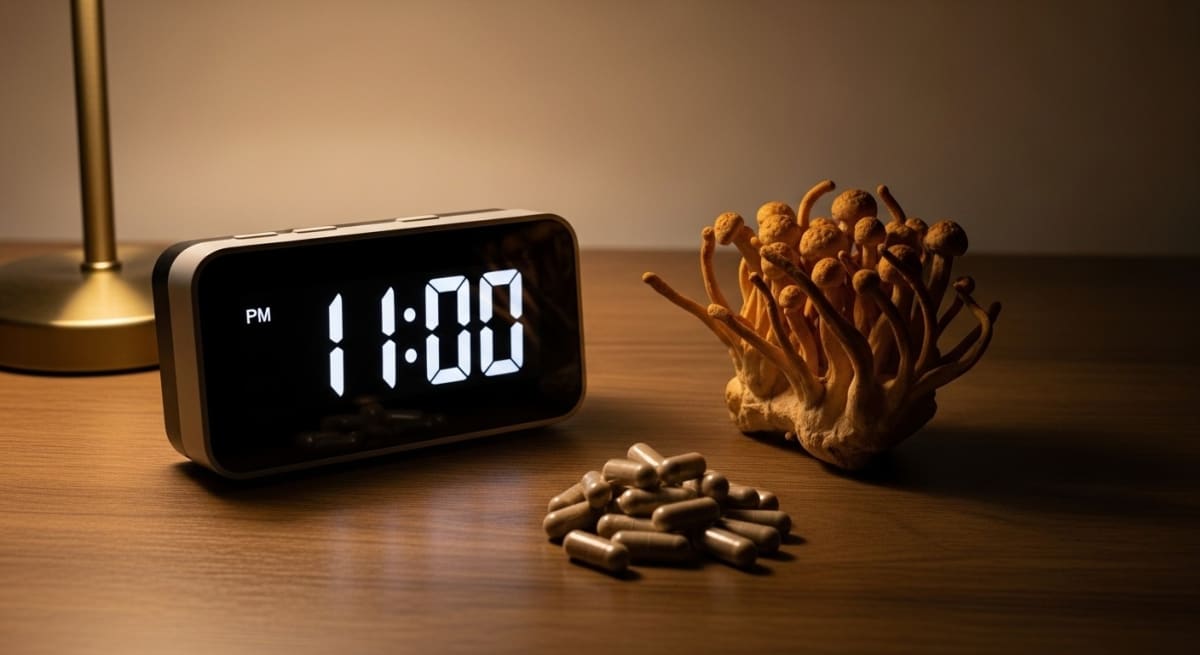
Taking cordyceps at night is an awful idea. It guarantees you stay awake. We reviewed clinical data on tissue energy pathways to figure out exactly how this fungus wrecks sleep architecture. The whole thing comes down to cordycepin. This strange little molecule mimics a major sleep chemical in the brain while simultaneously flooding cells with raw biological fuel, creating a highly stimulated internal environment that actively fights the natural processes of bodily and mental rest.
Key Takeaways
- 1Cordycepin in cordyceps blocks adenosine receptors, the same ones that signal your brain it is time to sleep
- 2The energy spike from cordyceps lasts 4-6 hours. A strict 2 PM cutoff prevents it from disrupting your night
- 3Reishi works on opposite pathways, supporting serotonin and melatonin production for deeper sleep
- 4Morning cordyceps plus evening reishi is the optimal daily protocol. Never combine them at night
Why Cordyceps Ruins Sleep
Our bodies regulate sleep pressure using a chemical called adenosine. It builds up in the brain all day. Heavy sluggishness follows. Cordycepin is what makes the difference here for Cordyceps militaris. Look at it under a microscope and the structure looks almost identical to adenosine, which causes a huge problem at bedtime because the cordycepin physically binds to those same receptors and entirely blocks the genuine fatigue signals from getting through. The mind stays wired.
Then we have to consider the physical energy aspect. A 2020 study published in 3 Biotech analyzed the pharmacological properties of cordyceps. The researchers found that the fungus forces the body to produce more adenosine triphosphate. That triggers a cascade of metabolic stimulation that utterly overrides natural circadian rhythms and blocks the brain from winding down.
ATP runs our muscles and organs. Dumping a bunch of ATP into the bloodstream right before bed tells the musculature to brace for a heavy workout instead of sleep. The heart pumps harder and muscle fibers tense up. Endurance athletes rely on this exact muscular readiness mechanism before morning training sessions.
How Long the Energizing Effects Last
Dose timing matters. The energy spike typically lasts four to six hours. That window shifts depending on individual metabolism and extract concentration. Water-soluble fractions absorb fast. We usually see that initial rush of alertness hit within forty minutes of dropping a capsule.
Morning doses present zero issues for evening routines. Taking a pill with breakfast gives the digestive tract plenty of time to break down the material. ATP production drops back to baseline by mid-afternoon. Try a dose at dinner and you invite a terribly restless night. We learned this the hard way after reporting sleep disruptions that stretched well past midnight on days we pushed the dose to 5 PM. We now recommend a strict two o'clock cutoff for these supplements. Treat the stuff with the exact same respect you give a triple espresso.
If late afternoon exercise is absolutely mandatory, carefully weigh the immediate gym performance against the massive potential for delayed sleep onset that always accompanies increased blood oxygen and sustained tissue firing. Lost deep sleep will ultimately negate the minor performance gains achieved during those late training sessions. For a full breakdown of timing windows across different extract concentrations, see our guide on the best time to take cordyceps.

The Better Bedtime Alternative
Leave the cordyceps for breakfast. Reishi is what we actually keep on the nightstand. Ganoderma lucidum operates on entirely different metabolic pathways and helps quiet the nervous system. We cover the full mechanism in our reishi mushroom before bed guide.
A 2021 animal study in Scientific Reports mapped how reishi influences sleep architecture. The researchers observed that the extract interacts directly with the gut microbiome to boost serotonin pathways, which ultimately feeds into producing the essential sleep hormones that govern our nightly rest cycles. Serotonin acts as a precursor to melatonin. Higher melatonin levels dictate how fast sleep arrives and how much restorative deep rest occurs. Animal studies show longer total sleep times after consuming reishi.
We build daily rituals using both fungi at different times. Drop a gram of cordyceps extract into morning coffee. Switch over to reishi roughly two hours before bed. Stir a gram of powder into hot water. The heat helps extract the triterpenes.
Do not mix them in the evening. Combining the two creates biological static. Cordycepin competes directly against the relaxing properties of those triterpenes. The nervous system receives entirely conflicting chemical messages. Physical exhaustion and mental wiring happen simultaneously.
Commercial mushroom formulas marketed for sleep should never list cordyceps on the ingredient panel. Check those nighttime supplement labels carefully. Some brands dump every popular fungus into a single master blend without considering how the isolated compounds interact with human biology, completely ignoring the basic pharmacology of how these distinct species either aggressively stimulate or gently suppress the central nervous system. Taking a kitchen-sink formula before bed practically guarantees a sleepless night. Isolated extracts maintain precise control over what enters the bloodstream at particular hours. Our mushroom supplement stacking guide explains how to build a schedule that keeps stimulants and sedatives separated throughout the day.
Frequently Asked Questions

A master of synergy who views health through the lens of balance. David has spent half a century studying how fungi interact with the human nervous system.
References & Further Reading
- Cordycepin for Health and Wellbeing: A Potent Bioactive Metabolite of an Entomopathogenic Medicinal Fungus Cordyceps with Its Nutraceutical and Therapeutic Potential. Molecules 2020 — Molecules (2020)
- Exploration of the anti-insomnia mechanism of Ganoderma by central-peripheral multi-level interaction network analysis. BMC Microbiol 2021 — BMC Microbiol (2021)