 Mushroom Health Hub
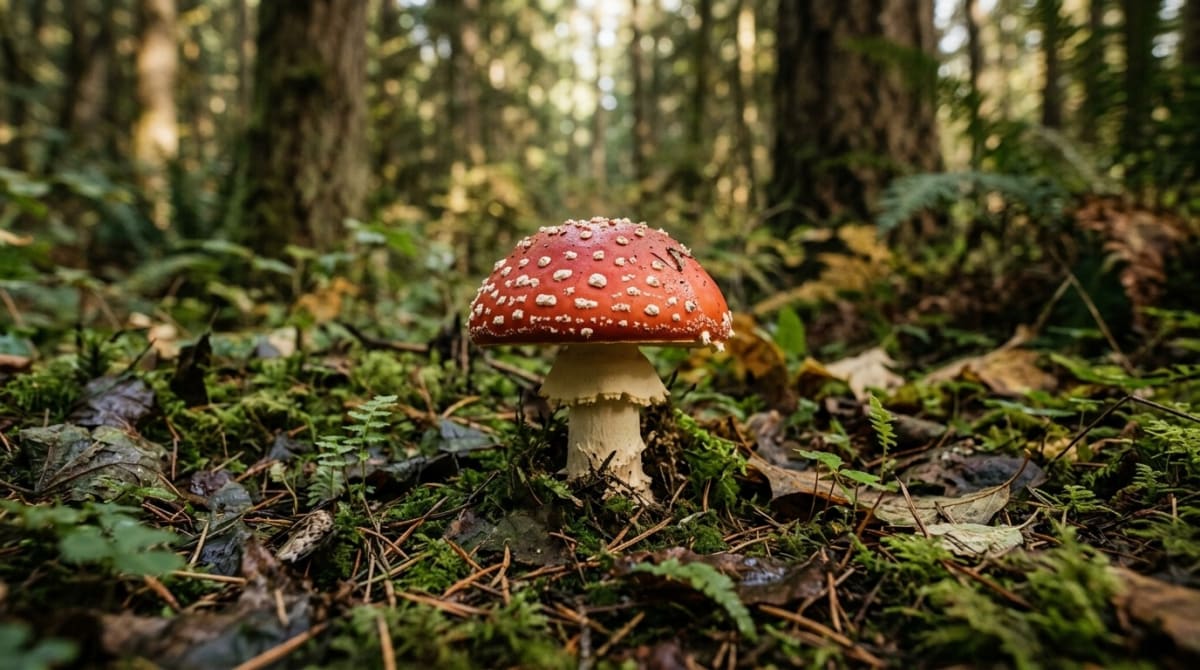
Most people assume Amanita muscaria is completely legal and therefore perfectly safe. The FDA strongly disagrees. On December 18, 2024 the agency fired off a letter to manufacturers declaring that this mushroom and its active compounds are unapproved food additives. Because they fall under this unapproved banner rather than just existing in an unregulated gray area, any gummy or chocolate containing them is legally adulterated.
We dug through the FDA's 2024 regulatory memorandum and paired it with poison control logs from the CDC to understand exactly what prompted this sudden federal crackdown on a rapidly growing supplement category. The reality is grim. Amanita muscaria is a toxic fungus with intense psychoactive properties. The commercial market built around it has churned out documented hospitalizations alongside mislabeled products that sometimes substitute Schedule I psychedelics for the listed ingredients.
Key Takeaways
- 1The FDA declared Amanita muscaria and its compounds unapproved food additives in December 2024. Any food product containing them is legally adulterated under federal law.
- 2Ibotenic acid is an excitotoxin that overstimulates NMDA glutamate receptors. Muscimol acts as a potent GABA-A agonist. Psychoactive effects from muscimol begin around 7.5 milligrams.
- 3CDC investigators tested gummy packages from Virginia gas stations and found undisclosed Schedule I drugs in multiple samples. Labels were unreliable.
- 4Functional mushrooms like reishi and lion's mane are federally legal dietary supplements. Amanita now carries an FDA food additive violation that gives federal regulators jurisdiction regardless of state law.
Why the FDA Issued Strict Warnings
The December 2024 letter carried actual legal teeth. It wasn't a suggestion. The agency scrutinized upwards of 600 unique publications covering safety profiles and concluded the data totally fails to prove human consumption is safe. They stated plainly that A. muscaria and extracted compounds like muscimol or ibotenic acid do not meet Generally Recognized as Safe standards.
Food loaded with an unapproved additive becomes adulterated under federal law. Selling that adulterated food across state lines triggers prohibited act statutes. The agency finally moved on this after their Adverse Event Reporting System started filling up with cases of central nervous system depression and unpredictable seizures that lead to sudden hospitalizations.
A quick query of the National Poison Data System reveals hundreds of panic calls in a single year. Callers reported severe cardiovascular effects and terrifying hallucinations. The FDA's own "Bad Bug Book" has labeled this mushroom a toxic agent since 2012. The clinical presentation hits hard and fast. Gastrointestinal distress gives way to delirium. At higher exposure levels patients crash into convulsions or outright comas.
What Ibotenic Acid Does to the Brain
Ibotenic acid is what makes the mushroom genuinely dangerous. It is an amino acid that acts as a potent agonist at NMDA glutamate receptors. It basically overstimulates a person's neurons until they fire themselves to death. Animal research thoroughly documents this excitotoxicity mechanism.
Direct injection into rodent brain regions triggers selective nerve cell body lesions. A classic 1979 paper in Experimental Brain Research demonstrated that the N-methyl-D-aspartate receptor mediates these destructive effects.
Human exposure via smoke shop gummies takes a vastly different biological route than direct brain injection. The mechanism still stands though. The acid is a pure excitotoxin. It pushes glutamate signaling way past normal biological limits.
Drying or heating the caps doesn't entirely solve the problem because the acid barely converts into muscimol during preparation, meaning both dangerous compounds survive the process and end up in the final consumer product. The FDA review noted that traditional boiling methods might not successfully detoxify the material enough for safe consumption. Muscimol itself drives a different set of issues. It mimics gamma-aminobutyric acid to act as a potent GABA-A receptor agonist. This creates the intoxicating sedation and deep confusion. Psychoactive effects kick in around 7.5 milligrams.
What Poison Control Data Shows
The Morbidity and Mortality Weekly Report dropped a field investigation in July 2024. Researchers tracked five patients treated in Virginia after eating mushroom gummies. Four adults ate them on purpose. All four suffered intense tachycardia and nausea. Emergency room doctors had to hit two of them with benzodiazepines just to manage the severe agitation.
A three-year-old child accidentally swallowed two pieces. That toddler ended up hospitalized with extreme somnolence and uncontrolled vomiting.
Researchers bought packages from local gas stations and ran them through liquid chromatography mass spectrometry to identify the chemical breakdown. Multiple packages contained undisclosed psilocybin or psilocin. Those are Schedule I federal drugs. The testing equipment couldn't even confirm if muscimol or ibotenic acid were present in the gelatin mix. The labels promised these exact compounds. The lab also found caffeine alongside the kratom opioid agonist mitragynine.
How Amanita Differs from Functional Fungi
You see these gummies sitting right next to reishi and turkey tail extracts on store shelves. The marketing uses identical naturalistic language. It wildly misrepresents reality.
Beta-glucans are what make functional species valuable because those polysaccharides train immune cells via Dectin-1 receptor binding without carrying any psychoactive properties or hidden neurotoxins that could damage the central nervous system. You could boil lion's mane for twelve hours without brewing a toxic soup.
Amanita caps hold excitotoxins. Boiling drops the concentration but fails to eliminate the risk entirely. No current extraction method reliably yields a clean product free of these unapproved additives.
Reishi and cordyceps sit perfectly legal as dietary supplements in the United States. The FDA never slapped them with an unapproved additive designation. Amanita carries that exact legal baggage now. Only Louisiana has banned the mushroom outright but the FDA's food additive determination gives federal regulators jurisdiction everywhere else.
Frequently Asked Questions

A dedicated wellness researcher who spent decades cataloging the impact of forest-based nutrition on human aging. Ashley doesn't care about trends; she cares about the data.
References & Further Reading
- FDA Alerts Industry and Consumers about the Use of Amanita Muscaria or its Constituents in Food. FDA Constituent Update 2024 — FDA (2024)
- Notes from the Field - Schedule I Substances Identified in Nootropic Gummies Containing Amanita muscaria or Other Mushrooms, Charlottesville, Virginia, 2023-2024. MMWR Morb Mortal Wkly Rep 2024 — MMWR (2024)
- Fly agaric poison - Health risks of fruit gummies containing muscimol, children are particularly at risk. BfR Communication 2025 — BfR (2025)