 Mushroom Health Hub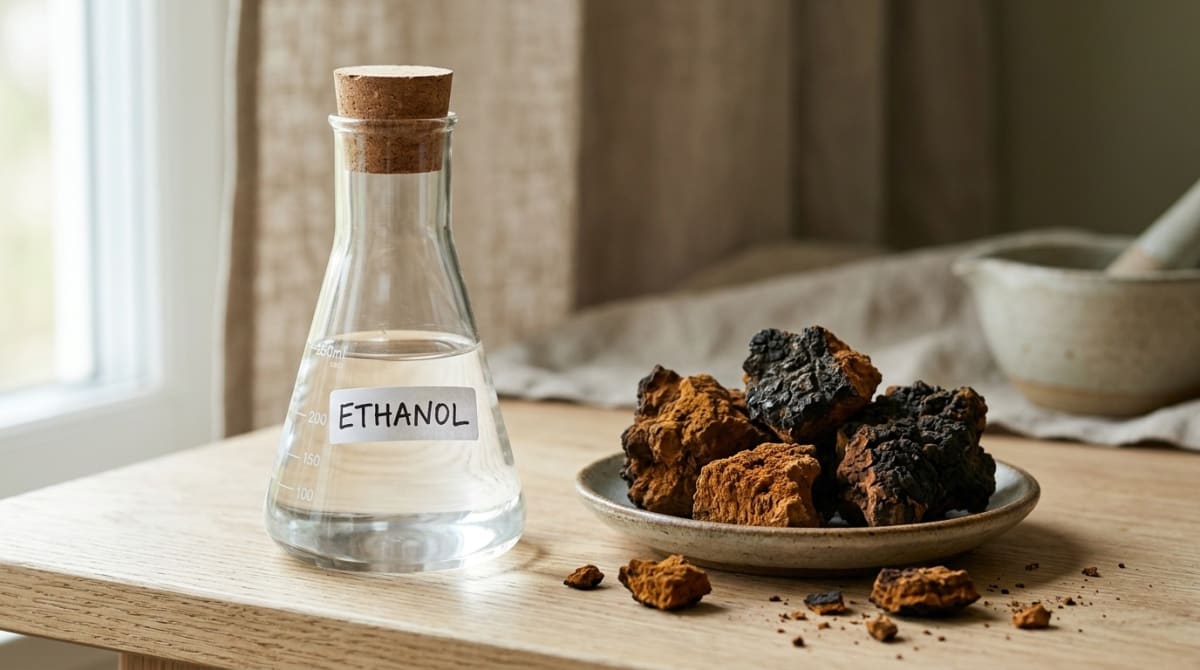
Lots of people who avoid alcohol are understandably nervous about dual-extracted mushroom supplements. It makes sense. You might literally be staring at a dark little dropper bottle right now wondering if it breaks your sobriety. Liquid tinctures contain real ethanol. Most commercial liquid extracts hover right around twenty to thirty percent alcohol by volume. A standard one-milliliter dropper of a 25% ABV extract delivers roughly 250mg of ethanol, about one-quarter of a standard beer's alcohol exposure. That solvent acts as a mandatory chemical bridge keeping those stubborn non-water-soluble triterpenes permanently suspended in the fluid.
Affiliate Disclosure: Mushroom Health Hub earns commissions from qualifying purchases made through links on this page. This supports our lab testing and does not affect our recommendations. We only recommend supplements that pass our quality standards. Learn more
If you need zero alcohol you should just buy a dual-extracted dried powder like Real Mushrooms Organic Reishi. Spray drying vaporizes the liquid. When a lab makes high-quality extract powders the ethanol solvent completely cooks off inside a pressurized drying chamber long before the final supplement ever gets packaged. The alcohol does its job of pulling those fat-soluble compounds out of tough woody fungi like reishi and chaga, and then the actual fluid vanishes completely leaving only the active medicine behind.
We tracked liver responses to reishi using published clinical data. The safety profile shifts radically depending on whether a person swallows a wet tincture or stirs dry powder into their cup. We mapped out exactly how much solvent survives in a standard daily dose. Let's look at whether that trace alcohol actually wrecks the delicate beta-glucans you paid for.
Key Takeaways
- 1Liquid mushroom tinctures contain 20-30% ethanol and cannot be made alcohol-free without destroying the triterpene compounds
- 2Dual-extracted powders are fully alcohol-free after spray-drying and safe for strict sobriety protocols
- 3Mixing reishi with heavy alcohol use can block liver enzymes and cause acute liver toxicity
- 4People on blood thinners or immunosuppressants should consult a doctor before using dual extracts
Common Side Effects
Physical complaints from alcohol-extracted mushrooms almost entirely depend on the format you swallow. Wet tinctures cause the most immediate grief. Because they hold onto twenty to thirty percent ethanol, taking them on a completely empty stomach often triggers mild acid reflux or a sudden uncomfortable warming sensation radiating through the chest.
The liquid hits fast. It is raw alcohol. Dropping that concentrated fiery burst down the hatch can seriously irritate the gastric lining of sensitive individuals even though the absolute volume of ethanol sitting in a standard dropper measures out quite small.
Dry powders bypass this mess. Without the liquid ethanol sitting in the mix, dual-extracted powders typically only trigger mild digestive rumblings as the gut microbiome scrambles to adapt to all those dense fungal polysaccharides. The digestive tract simply needs a minute to adjust to the influx of complex fiber. Expect minor bloating during the first week.
Another big concern we see a lot is whether the harsh ethanol process ruins the medicinal value. Alcohol absolutely precipitates beta-glucans. If a sloppy manufacturer just drops raw mushroom chunks straight into high-proof alcohol, the aggressive solvent tightly locks up the cell walls and degrades those immune-supporting polysaccharides. To dodge this chemical trap the really reputable producers run their hot water and alcohol extractions completely separately in massive industrial vats. They only combine the isolated chemical compounds at the very end of the line. The alcohol yanks out the bitter triterpenes while the hot water carefully saves the delicate beta-glucans. This smart separation yields those sought-after triterpenes without reducing the polysaccharides into useless mush.
Serious Concerns
The heaviest risk surrounding alcohol-extracted mushrooms usually involves unpredictable liver strain. Nobody talks about this. Reishi mushrooms are actually famous for their hepatoprotective properties. A 2022 animal study in Current Research in Food Science demonstrated that ganoderic acids pulled from reishi ethanol extracts protected livers from alcohol-induced damage and significantly reduced oxidative stress markers over eight weeks of daily dosing.
But throwing heavy alcohol consumption together with unstandardized reishi powders can spectacularly backfire. A 2023 case report in Cureus documented a man who developed acute toxic hepatitis after spending a weekend binge drinking while simultaneously knocking back huge amounts of reishi powder. The researchers suspect a biological clash happened. Reishi extracts can inhibit an enzyme called CYP2E1. The liver leans on that exact enzyme to metabolize everyday ethanol. When the mushroom blocks the pathway, the alcohol just sits there. It stays in the bloodstream much longer than normal. This blockade ramps up the toxicity of those weekend drinks and completely overwhelms the liver's natural filtration capacity over a matter of days.
Taking a standard measured dose of dual-extracted powder alongside a morning coffee is perfectly safe. Chasing massive handfuls of mushroom extracts with heavy liquor is a fast track to a medical disaster.
Drug Interactions
Potential drug interactions mostly stem from the raw mushroom compounds rather than the trace alcohol floating in the tinctures. The actual interaction list is fairly short.
Because dual-extracted reishi and chaga aggressively modulate immune function and cardiovascular pathways, they absolutely interfere with certain prescriptions. Blood thinners present the biggest collision risk here. Triterpenes pulled from the mushrooms during the alcohol extraction phase boast natural anti-platelet properties. They stop blood from clotting. For patients swallowing daily warfarin or baby aspirin, tossing a potent dual extract into the mix could push the bloodstream into a dangerously thin state, raising the risk of spontaneous bruising or severe bleeding to uncomfortable levels.
Immunosuppressants also violently clash with these extracts. If patients take heavy medication to suppress their immune system after a recent organ transplant, the beta-glucans floating in the hot water fraction will directly fight the prescription by stimulating new white blood cell production.
Finally, think back to the CYP2E1 enzyme inhibition we looked at earlier. Any pharmaceutical drug relying on that specific liver enzyme for daily clearance might start building up in the bloodstream if users swallow high doses of alcohol-extracted reishi every morning. It forces the body to process complex medications at a totally unpredictable and unsafe pace.
Who Should Avoid It
Anyone maintaining strict sobriety really must avoid liquid mushroom tinctures. Read the labels closely.
Even though a standard one-milliliter dropper holds an incredibly tiny absolute volume of raw ethanol, that twenty to thirty percent concentration packs enough of a punch to trigger a psychological relapse. It absolutely violates stringent recovery protocols. Sober individuals should switch exclusively over to dual-extracted dried powders. These dry formats contain zero residual alcohol after surviving the brutal spray-drying phase. For more on safe formats, explore our guide to mushroom extraction methods and how dual extraction preserves the full spectrum of active compounds.
Folks currently dealing with acute liver disease or severely elevated liver enzymes should immediately pause all mushroom extracts. Wait for the green light from a hepatologist. While those triterpenes might provide long-term protective benefits for healthy internal organs (as shown in our research on liver support), dropping dense fungal compounds onto a failing liver just creates piles of metabolic homework for an already overwhelmed system. Wait until baseline blood numbers stabilize before adding functional fungi back into the routine.
Frequently Asked Questions

A dedicated wellness researcher who spent decades cataloging the impact of forest-based nutrition on human aging. Ashley doesn't care about trends; she cares about the data.
References & Further Reading
- Ganoderic acids-rich ethanol extract from Ganoderma lucidum protects against alcoholic liver injury and modulates intestinal microbiota in mice with excessive alcohol intake — Curr Res Food Sci (2022)
- Ganoderma lingzhi (Reishi Mushroom)-Induced Acute Liver Injury in the Setting of Alcohol Use: A Case Report and Review of the Literature — Cureus (2023)