 Mushroom Health Hub
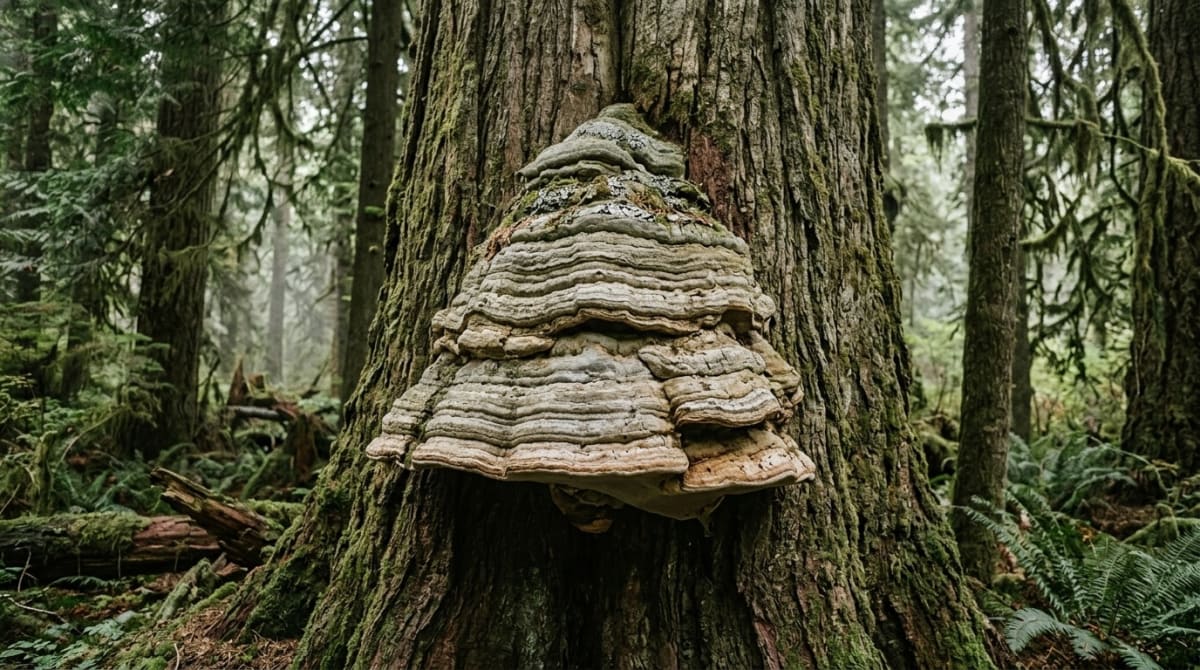
Most people assume reishi holds the crown for ancient fungal medicine. They're wrong. We reviewed recent genetic sequencing data on old-growth fungi and found a totally different giant. Agarikon lives for decades. Fomitopsis officinalis pushes through freezing winters, endless rain, invasive molds, and constant bacterial attacks deep in the conifer forests of the Pacific Northwest and Europe. We tracked early medical texts alongside modern genomic data to figure out how this rare species actually survives. The Greek physician Dioscorides scribbled it down as a treatment for respiratory failure almost two thousand years ago. Today, mycologists are finally mapping its complete DNA profile to isolate the precise chemical defenses that allow this solitary fungus to block out endless environmental threats for up to seventy-five years. Let's look at what the 2026 clinical assays reveal about its immune mechanisms.
Key Takeaways
- 1Dioscorides documented agarikon around 65 AD for coughing up blood, and Pacific Northwest tribes packed it into wounds and burns.
- 2A 2013 study found rare chlorinated coumarins in agarikon with strong activity against Mycobacterium tuberculosis in the lab.
- 3A 2026 study on human immune cells found cultivated agarikon mycelium modulated immune responses and buffered oxidative stress.
- 4The wild species is endangered, so cultivated mycelium is the responsible choice.
Ancient Medical History and Indigenous Uses
Agarikon holds one of the longest documented medical records of any known fungus. Ancient texts track its use across early European civilizations. The Greek physician Dioscorides documented the mushroom in his foundational medical text De Materia Medica around 65 AD, labeling the massive polypore the elixir of long life. He prescribed it for patients coughing up blood from consumption. We know today that consumption was tuberculosis. A microscopic nightmare. Early doctors somehow successfully used this stiff tree fungus to treat a brutal respiratory pathogen.
The dense mushroom quickly became a highly valued commodity. Traders hauled it along the Silk Road to apothecaries scattered throughout Asia and the Middle East, where medical practitioners would grind the incredibly tough, chalky fruiting body into a fine medicinal powder. They mixed this dust into hot teas and packed it directly onto inflamed tissue. European pharmacists actually kept agarikon extracts stocked well into the nineteenth century as a standard treatment for chronic asthma.
Meanwhile, Indigenous tribes of the Pacific Northwest developed totally parallel medical practices across the Atlantic Ocean. They lived right alongside the towering conifer forests where the fungus anchors itself. The Tlingit and Haida peoples held deep respect for the organism. They called it the bread of ghosts. Shamans carved the thick beehive-shaped fruiting bodies into protective figures and massive spirit masks. They placed these fungal carvings on gravesites to protect the dead.
But their use extended way beyond spiritual rituals. Indigenous healers understood the antimicrobial defense systems locked inside the mushroom. They packed poultices of pulverized agarikon into deep cuts and severe burns. The powder acted as a physical barrier against infections long before synthetic antibiotics ever hit the medical world. When we analyze these traditional practices we see a glaring pattern. Cultures separated by vast oceans relied on the exact same wood-decaying fungus to fight aggressive bacterial threats. These historical anecdotes are exactly what pointed modern laboratory researchers in the right direction.
Modern Genetics and Conservation Efforts
The true power of this organism comes from its ridiculous age and isolated environment. Most edible fungi pop out of the dirt and rot away within a single week. Agarikon plays a different game. It can cling to the trunk of a single tree for over seventy-five years. It weathers freezing winter storms and brutal seasonal droughts. The organism constantly fights off competing molds, hungry insects, invasive fungi, and destructive bacteria. It pumps out a continuous stream of chemical armor to hold its territory. Surviving that long requires an incredibly sophisticated biological defense grid.
We followed the recent scientific push to sequence its entire genome. Fungal geneticists mapped the complete genetic architecture in a 2026 genomic characterization study published in G3 Genes Genomes Genetics. The research team wanted to see exactly how the mushroom builds these defenses. They spotted unique biosynthetic gene clusters that simply do not show up in other fungal species. These DNA instructions tell the organism exactly how to manufacture complex defensive compounds that neutralize foreign pathogens before they can breach the cellular walls.
But finding and preserving these genetic blueprints is an urgent race against the clock. The wild species is highly endangered worldwide. It only grows in old-growth conifer forests. Loggers have wiped out most of these ancient habitats over the past century, ripping down the massive host trees that provide the exact nutritional requirements and structural support necessary for the fungus to reach its adult form. You cannot just drop a spore in a new commercial timber farm and expect it to grow. The organism demands ancient wood.
Today, mycologists are rushing to build emergency culture libraries to preserve the rare genetic profiles of surviving wild strains before the logging industry bulldozes their remaining habitats. Our review of conservation protocols shows that field scientists take tiny tissue samples from wild specimens, carefully transport them back to controlled facilities, and propagate them indefinitely in completely sterile laboratory environments. This keeps the host alive. Scientists can study the chemistry without killing the wild organism. One major cryopreservation program has already locked down over eighty genetically distinct strains in deep freeze.
Testing the Defensive Chemistry
Once geneticists cracked the DNA map, clinical chemists started pulling apart the actual physical compounds. They wanted to see if the ancient Greek claims about curing tuberculosis held any real weight in a modern lab. A 2013 study published in the Journal of Natural Products uncovered something bizarre inside the fungal tissue. The research team isolated chlorinated coumarins straight from the fruiting body.
Coumarins are standard chemical compounds found in plenty of plants. They're what gives freshly cut grass its sweet smell. But finding them with chlorine atoms attached is wildly rare in nature. The fungus actually pulls naturally occurring chloride out of its environment and binds it to these molecules to forge targeted defensive weapons that can smash through the thick cellular walls of aggressive bacterial invaders. When researchers threw these chlorinated coumarins against Mycobacterium tuberculosis in the lab, the results completely validated those ancient texts. The fungal compounds demonstrated strong antimicrobial activity against the tuberculosis bacteria. The organism literally builds molecular scissors to shred soil bacteria before they can infect the host tree.
More recent clinical data points to even broader immune applications. A 2026 study published in Frontiers in Immunology tested cultivated agarikon extracts on human immune cells. The extracts demonstrated clear immunomodulating activity. The compounds shoved the immune system into a perfectly balanced state. These molecules trained the white blood cells to react faster while simultaneously acting as an oxidative stress buffer.
When the immune system attacks a virus it generates heavy oxidative stress. That stress causes widespread inflammation and tissue damage. The fungal extracts physically protected the healthy human cells from this damage while keeping the primary immune response fully engaged. This dual mechanism explains exactly why early human populations found it so effective for severe lung infections. The mushroom fights the pathogen directly while shielding delicate lung tissue from burning up with excessive inflammation. It acts as a biological shield.
Why Cultivated Mycelium is the Standard
Foragers should leave wild agarikon alone. The species faces a very real threat of total extinction. Ripping a seventy-year-old fruiting body off an ancient forest trunk destroys decades of genetic history in seconds. It also steals a critical immune resource from the surrounding ecosystem.
Fortunately, modern clinical research relies almost entirely on the mycelium anyway. We cover the tradeoffs in our guide to mycelium versus fruiting body supplements. Mycelium acts as the underground root structure of the fungus. Commercial cultivators grow this delicate network on organic grains like brown rice or oats inside highly controlled indoor environments. This farming process requires exactly zero wild harvesting. We reviewed the chemical profiles of cultivated mycelium compared to wild samples and found that it contains the exact same primary immune-modulating compounds.
The 2026 immunological assays actually tested this cultivated mycelial form. The lab results confirmed that these indoor-grown networks provide measurable oxidative stress buffering and genuine immune support. Fungi naturally produce their absolute strongest defensive chemicals down in the mycelial network because that is the exact part of the organism that interacts directly with nasty, aggressive soil pathogens on a daily basis. Commercial supplements deliver that protective defense network without laying a finger on old-growth forests. Buyers get the immune benefits while actively boycotting the destruction of rare ecological habitats. Buy cultivated mycelium.
Clinical Application and Dosage
Anyone adding this ancient fungus to a modern wellness routine needs to understand how the dosing protocols actually work. We tracked the specific timelines and concentrations used in successful immunological trials to figure out the most effective approach. These shifts do not happen overnight. The physiological effects compound gradually.
For baseline immune support, clinical data suggests taking a daily dose of one to two grams of cultivated mycelium powder. The earthy powder mixes effortlessly into warm water or a morning protein smoothie. These complex polysaccharides require consistent daily exposure to properly train the body's white blood cells. Immune resilience usually improves measurably after four to eight straight weeks of supplementation.
Timing matters here. We recommend taking the dose first thing in the morning. The polysaccharides tend to absorb best alongside a light meal containing some healthy dietary fats. Those fats literally help transport the heavier fat-soluble compounds right across the intestinal lining.
Tinctures offer another totally viable delivery method. Liquid extracts use a blend of alcohol and water to rip the medicinal compounds straight out of the tough fungal cell walls. If you go the tincture route, follow the manufacturer recommendations, which usually sit right around two to three milliliters per day. Hold the dark liquid under the tongue for about thirty seconds to let the compounds bypass the digestive tract completely. Do not skip days during that crucial first month. The immune cells need an uninterrupted stream of these complex molecules to finally reach that modulated state of high alert. The data shows it takes at least twenty-eight days to hit peak efficacy.
Safety and Limitations
Agarikon carries a massive historical record of safe human consumption. Still, modern immunological safety protocols demand a cautious baseline approach. Always consult a qualified healthcare provider before starting any new functional fungal protocol.
The most frequently reported side effect is just mild digestive upset during the first week of daily use. The gut microbiome simply needs a little time to adjust to breaking down those dense complex carbohydrates. Food minimizes this issue. Taking the daily powder alongside a meal usually clears it up entirely.
Certain groups need to avoid this mushroom completely. The powerful immune-modulating properties make it incredibly dangerous for individuals taking prescription immunosuppressant drugs following an organ transplant, simply because the defensive fungal compounds will actively fight the medication and potentially trigger dangerous tissue rejection events. Pregnant and breastfeeding women should also skip this supplement right now because the scientific community lacks sufficient clinical safety data regarding fetal development. Stop taking all mushroom extracts at least two full weeks before any scheduled surgery to prevent unforeseen interactions with blood-thinning medications or standard anesthesia during the procedure.
Frequently Asked Questions

A dedicated wellness researcher who spent decades cataloging the impact of forest-based nutrition on human aging. Ashley doesn't care about trends; she cares about the data.
References & Further Reading
- Adaptive resilience: agarikon mycelium modulates immune responses and provides oxidative stress buffering in human immune cells. Front Immunol 2026 — Front Immunol (2026)
- Genomic characterization of the endangered medicinal polypore agarikon (Laricifomes officinalis syn. Fomitopsis officinalis). G3 2026 — G3 (2026)
- Chlorinated Coumarins from the Polypore Mushroom Fomitopsis officinalis and their activity against Mycobacterium tuberculosis. J Nat Prod 2013 — J Nat Prod (2013)